
In the Confiteor we pray:
That I have sinned through my own fault
In my thoughts and in my words,
In what I have done and in what I have failed to do …
It is a counter-cultural thought really as we are held accountable for what we do and what we say in a legal sense in society today. How do we hold someone accountable for what they don’t do and what is left silent?
It’s a tricky landscape the sins of omission. It is both collective and individual. Yet traditionally we see sin as more of an individual thing for which each person accounts for his or her own sin. Countless times I have told children in school not to focus on the consequence for the other but to think about what they did as that is what they are responsible for and if their consequence is just and yet our collaborative sin often renders far more devastation and needs to also be addressed. It is a bit of a conundrum as we like collective justice (a sort of fairness) but it does not exist. We all carry different frailties and limits and therefore are capable of varying outcomes. Surely the focus should be on what we can do rather than what we can’t – and then do we do all we can?
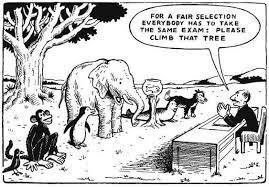
External requirements cannot be a constant. Even so, there are things that are being perpetuated into the fabric of society because we do nothing. These are our sins of omission. To sin is to go against divine law – usually we say it is a moral transgression but this is about our failure to act. Realistically if our inaction, that we have the skills and facilities to address, results in harm to others then it is sin. Ignorance is not an excuse as, just like in law, we have a responsibility to be aware. Not everyone has the same ability to do so but how do we face this in a society where people are encouraged to look after themselves first, to justify all the harmful things we do, to talk about individual truth overpowering the need to be just, to talk about an individual conscience and about intention as if that is more important than action. These are the things we fail to do. We have the technology to be informed, but we aren’t. We have enough to feed the world, but hunger still kills. Fear and hate power society instead of love and kindness. Equality is still a myth. The earth is struggling to breathe but we have the skills to save it. We are charged with stewardship of creation. Look at how we have failed there – both individually and collectively. We are supposed to keep safe the weak. And yet the elderly and disabled, women and children are frequently facing dangers from predators. Predators who are bound by the same moral code of humanity.
Matthew 16:26 “For what is a man profited, if he shall gain the whole world, and lose his own soul? Or what shall a man give in exchange for his soul?”
This part of the Gospel came out of what seemed to be a frustrated Jesus in dialogue with disciples that just weren’t entirely ‘getting it’. There was a bit of ‘pendulum swinging’ among the inner circle from their inability to understand metaphor to Peter’s declaration to then just after being called the rock, being told to ‘get behind [him] Satan’. When we are frustrated don’t we sometimes grab at language that is powerful so that people will understand at least a little? This says to me that my soul is the most important part of me. There has been much written about the soul by Plato, Aristotle and Aquinas but my contemporary view after reading them (and others) is that I am soul and I have body. I like the infinite aspect of ‘am’ whereas the body deteriorates, dies and decomposes. The soul is eternal. Or is it? Can you lose your soul (as suggested in the scripture passage above)? Or worse, can you give it away? I had been wondering if you could destroy parts of the soul but upon further reflection (on the words of those far wiser than myself) it appears that the soul is an entity and cannot be fragmented and therefore you cannot destroy parts of it, but the health of the soul or the energy or esse can diminish. If the soul is the life force that sustains our being why do we not look after it more than our body? Why do we not strive for what is life-sustaining for our soul rather than pleasurable for the corporeal?
So if the soul is where we are most in unity with the divine and sin is our turning away from the divine and that unity what can we do about it? When we say those words at Mass (or in private devotion) do we let them seep into the deepest cavern of our existence so that we can be more aware of the things that we fail to do? Society is not going to hold us accountable for these omissions as it is firmly entrenched in a philosophy of accountability – but our soul is charged with divinity and we are ultimately called to actively seek for the marginalized and to act with compassionate determination to deserve to be called co-creators of a world of which we are stewards, not owners. Let us not lose hope in our own humanity.

[I think there is much to be considered in how we address the sins of omission in a practical sense in our world and this will form part 2 (and possibly part 3) of this topic]
 The Female Theologian
I love the challenge to act with compassionate determination for the common good
LikeLike