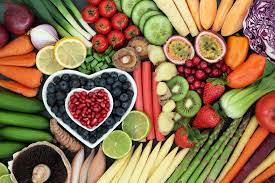
Society reminds us almost daily to ‘fuel’ our bodies. That what we put into our body DIRECTLY impacts our health and wellbeing. Our physical body is positively affected by giving it the nutrients that help it function at a higher level, conversely giving it chemically evolved food negatively affects our ability to function effectively. There are needs – nutritional needs – that our body has and if we meet these we can use our bodies more to capacity.
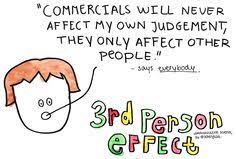
Why do we not apply this to our minds and our spirit? What do we feed our minds and spirits? We all share a common biology and the whole nutrient-in concept is accepted but when it comes to our minds and spirits we don’t apply the same parameters? As a parent driving children to school I used to be appalled at some of the topics covered and things said on radio whilst my children were in the car, there appears to be no limit on what is put out there as if it doesn’t affect us. Some people assert that nothing put out there affects us personally. There is this thing called the Third-Person Effect; the idea that social media messages impact others more than they do ourselves. Sounds a bit non-sensical to assume we have immunity when others don’t.
The reason I write this in this context is because I believe some of this is our collective sin of omission. Society had (and still has) the chance to make pornography illegal. But we didn’t and don’t. From some PD I did on the impact of pornography and the reality of it based on the resource ‘In the Picture’, I discovered some terrifying statistics. Most porn has violence towards women. Not just women – 88% of porn has physical violence but 94% of that aggression is directed towards women. Consider that alongside the fact that in Australia, intimate partner violence causes more illness, disability and deaths than any other risk factor for women aged 25–44. But we live in a society where many say they can watch it and it does not affect how they think and behave? Surely not.
In what I have failed to do …
Society has failed to protect women. We do not act when we have the chance and with this example ultimately we prioritize process and money over wellbeing and well … life. Equality simply does not exist but this threat on physical and emotional safety is something we need to address first. If sin is a moral or religious transgression and a state of sin is being estranged from God then what sort of state are we heading to if we keep minimizing the devastating impact of sin on ourselves and others? I’ve even heard women in Catholic institutions describe the porn industry as a valid workplace, that if someone chooses it and is paid for it, then this is ok.
I say no.
The ‘industry’ simply should not exist. Instead of suggesting that it is better to have some way of earning money why not look at creating other work opportunities. My criticism is FIRMLY directed at those that create the industry and promote it, not those who fall prey to life’s struggle and find themselves on screen. We are all human and do what we need to survive. The damage that this industry has on young and old is mammoth. If we look at the statistics and join the dots what can we say about the impact on society, on ourselves, on our very soul?
This brought me to a conundrum at Mass. Before Communion we say ‘Lord I am not worthy for you to enter under my roof, but only say the word and my soul shall be healed.’ I really struggled with this last weekend as I thought about the soul as that most beautiful space within where we encounter the Divine. These words at Mass seem to suggest that our soul is intrinsically broken or sick or fractured, but our soul is innately beautiful beyond our comprehension. I understand (and like) the reminder that we are flawed and need to be humble but I don’t like this suggestion that the soul -that place of connection with God – is broken. I understand the reconciliatory aspect of this prayer and that we always need forgiveness but a broken soul? The theological concepts are beyond my words (for now anyway). It is a concept that sits uncomfortably for me and I will keep thinking about it until I find the words I am so lacking right now. Instead, for now, what if we focused on what we can do to help keep our soul healthy just like we spend all this time on our bodies?
So instead of what should we not do – let us just think what we can do to be healthy? What are the ‘nutrients’ for our soul? Logically, if the soul is the space of connection with the Transcendent then there needs to be something that nourishes that landscape. Which inspirational authors, what music, what art, what activity make you feel the presence of God and calls you to be your best version of self, living out all the values that we espouse that in our daily life we struggle to fulfil in our increasingly secularized society?
There is a song by Banners called ‘Where the Shadow Ends’. Whilst not the entirety of the song applies here there is a vibe to it that just calls out to me in this conversation:
When you can’t go round and you can’t outrun
What lies behind, what stands in front
Through the broken gates of kingdom come
I will see you again when the night is dawn
There’s a darkness up ahead
I will see you where the shadow ends
Cross the badlands to rise again
I will see you where the shadow ends
As an English teacher I always appreciate the play on dark and light – it really is timeless. This part I find is timely – we are in a situation that is created and narrated to some extent by the things that have preceded us and where we are headed. We cannot avoid this context – it is in this we exist. The idea of the kingdom having broken gates I think speaks to the corruption we have seen and continue to see in our religious organisations which have continued to succumb to the trappings of power. The gate may be broken but it is still functional, but perhaps it is time to repair it. There is always going to be light and shade but there is that point where the shadow does end and sometimes we have to journey through ‘badlands’ if we are to rise again to the challenge of being Gospel-inspired people.
 The Female Theologian