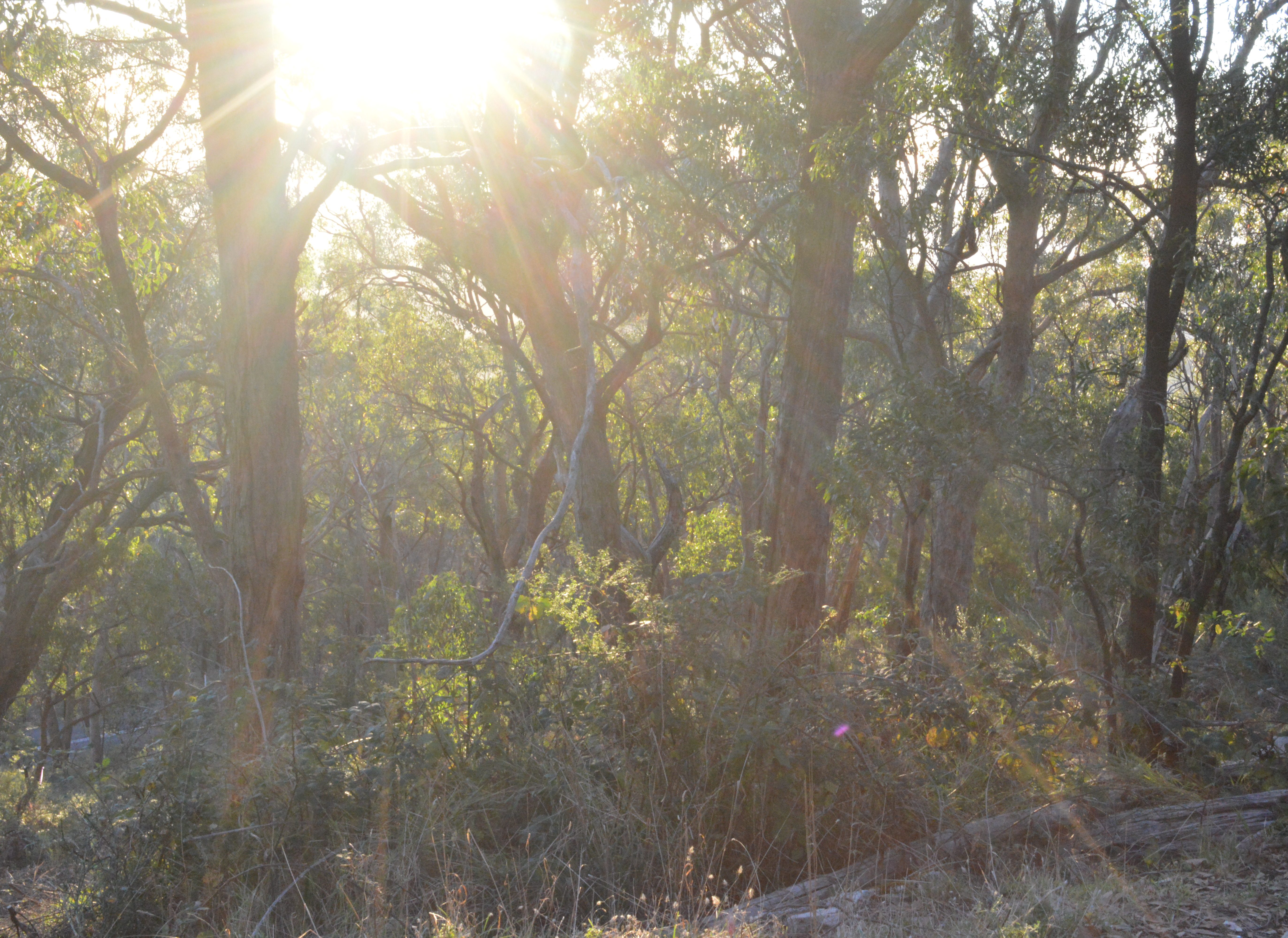
This year, Advent arrives with a bruise. In the midst of a season that teaches us to watch, to wait, and to practise the small disciplines of hope, Australia has become a nation of grief. A mass shooting at Bondi Beach struck people gathered for a Hanukkah celebration, killing 15 and injuring many others. Today, Sunday 21 December 2025, has been named a Day of Reflection to honour those who died and to express solidarity with Australia’s Jewish community. So, I pause and reflect.
Hanukkah is a feast of light and Advent is a season of light, and the collision of those realities raises a question: what kind of world is this, where people cannot gather in peace to remember, to sing, to light candles, and to be together without fear? If you are Jewish and reading this, I want to say simply and plainly that I am sorry, not in a vague, weightless way, but in the concrete way that means this should not have happened, you should have been safe, and your celebration should never have been treated as a target. And if you are Catholic and reading this, I think we need to resist the temptation to turn Christmas into a soft blanket we pull over reality, because the Incarnation does not deny darkness; it insists on entering it.
One of the most persistent temptations in religious life is the speed with which we move toward meaning, as though tragedy must become ‘useful’ in order to be held, or as though the correct theological sentence can protect us from the sheer disorienting helplessness of grief. Scripture does not teach us that speed is holy. The Bible gives us lament as a form of fidelity: psalms that protest, prayers that tremble, and voices that refuse to baptise suffering with easy explanations. Do you notice how grief is not only an idea but a bodily reality, how fear migrates into shoulders and stomachs, how mourning changes the texture of time, and how trauma can become a kind of second liturgy, an involuntary vigilance that reshapes the way a person enters public space. It also raises a question that is not abstract: who is being asked to carry the cost of this violence in their bodies now, not only those who were wounded and those who are bereaved, but an entire community who may now wonder whether gathering itself has become dangerous?
In a season like this, it matters that we speak plainly. This is horrific. This is violation. This is grief that does not obey our calendars. This is not our story to interpret; it is our responsibility to stand beside. Naming of a Day of Reflection is a reminder that public naming can be a form of honouring, especially when silence risks becoming a way of letting fear settle in unchallenged.
We often speak about light in December as though it is aesthetic, as though it belongs to mood and decoration, but the biblical imagination is sharper than that. Light, in the tradition of Israel and the Church, is never merely pretty; it is defiant, it is a refusal to accept that violence gets to name reality, and it is also a practice that forms the heart slowly, candle by candle, against despair. We can learn from our Jewish neighbours here without taking what is not ours; we can recognise that both traditions understand light as something held in the teeth of darkness, not as a denial of it.
Christmas, at its most uncompromising, is God choosing proximity rather than distance. The Word becomes flesh not in a world that has become safe, but in a world where empire still controls the air, where families are vulnerable, where political threat is stitched into ordinary life, and where motherhood itself can become a site of risk. Mary is a young woman whose yes is lived through uncertainty, danger, displacement, and the public vulnerability of carrying life. She is a witness to what it means to hold life tenderly when the world remains unstable, and to trust that God-with-us is not conditional on a peaceful society.
We also need to be unambiguous: antisemitism is a sin, and it must be named as such. It is not merely sad or divisive; it is an assault on human dignity and an affront to God, and we have a responsibility to refuse it.
In practical terms, solidarity is not a sentence; it is a posture that has weight. It looks like showing up at vigils or gatherings led by the Jewish community, respectfully and without making it about us. It looks like refusing jokes, stereotypes, and casual comments that allow contempt to breathe. It looks like teaching our children, in age-appropriate ways, that a violent act targeted Jewish people and that our response must be neighbourliness rather than suspicion, protection rather than distance. And it looks like guarding our own religious language from becoming a spiritual bypass, where hope is used as a way of avoiding the work of grief, accountability, and change.
As I move toward Christmas this year, I find myself praying for an honest heart. I want Advent candles that are not performative, but faithful; I want a hope that does not erase lament, but has the courage to stand inside it; and I want a solidarity that costs something, because anything cheaper than that is simply a gesture. At 6.47pm tonight I will light a candle with intention. Will you pause and reflect with me?
A prayer for this week:
God of Abraham and Sarah, God who hears the cry and gathers the broken, hold close the families who have lost beloved lives at Bondi, hold close the Jewish community carrying shock and sorrow, and hold close the wounded, the frightened, and the numb. Teach us not to rush grief into usefulness, teach us not to look away, and make our Advent waiting a practice of neighbour-love that is concrete, courageous, and enduring. As Christmas draws near, let the light we bear be solidarity that is more than words, and love that refuses to be selective. Amen.
 The Female Theologian