
Soon the Paschal Triduum will be upon and around us. It is important, I think, not to rush through the brutality of Good Friday because we know that Sunday is coming. Good Friday is devastating. And on this day, we are not asked to explain that devastation away. We are invited instead to sit in it, to pray in the discomfort, and to resist the urge to make the cross more palatable than it is.
That feels especially important now, because there is still so much in our world that ought to make us uncomfortable. We may not witness public executions in the town square, but betrayal is everywhere. Humiliation has become a form of entertainment. Rejection is so common that many barely know how to name it anymore. We scroll past suffering, filter it, anaesthetise it, soundtrack it, and move on. But the cross does not let us move on so easily. It asks us to look again. To look longer. To see the world as it is, without tinted glasses.
And it is devastating.
But Easter is the holy insistence that brutality will not have the final word.
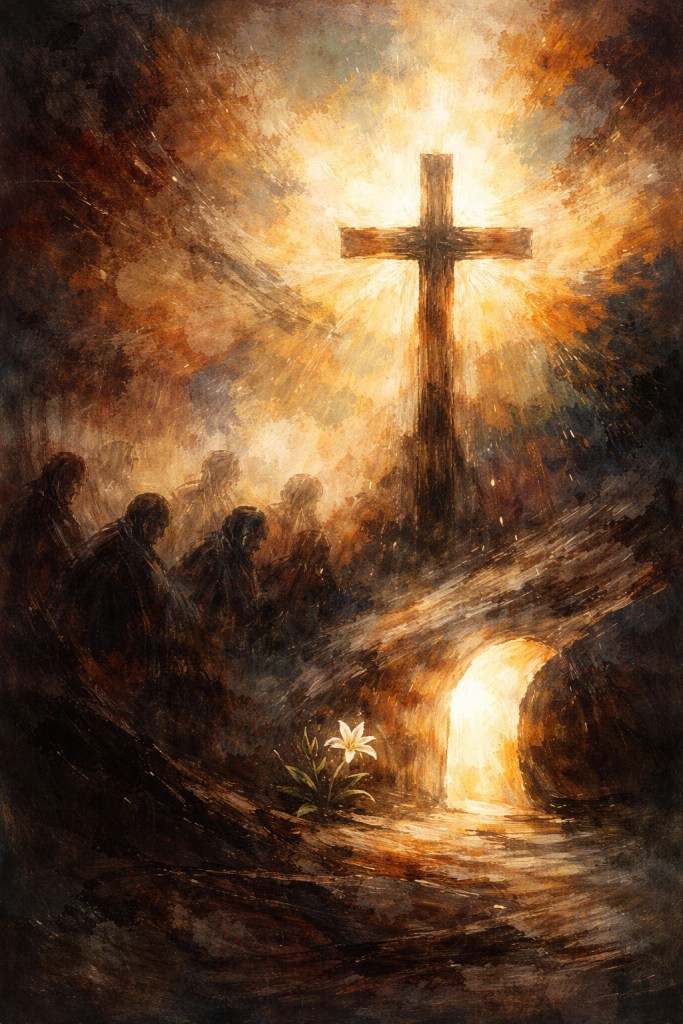
When the Risen Christ returns to the disciples he still bears the wounds. The wounds are not hidden. They are transfigured. Good Friday was not a passing shadow. Resurrection, then, is not the cancellation of the cross, but God’s vindication of the one who was crucified, and in him, of all those whose lives are crucified by injustice, grief, exclusion, and loss. It is God’s decisive declaration that suffering and sin do not have ultimate claim over human history. The Resurrection reveals that even in a world marked by brutality, grace is still at work, and life remains open to God’s future.
This is part of what makes Easter hope so compelling, and so necessary, especially for those of us who work with young people. They are still becoming. Still being formed. Still learning how to live with disappointment, grief, anxiety, failure, exclusion, uncertainty, and all the smaller deaths that come before the larger ones. And what they need from us is not shallow reassurance or borrowed motivational slogans. They need hope.
They need Christian hope: the kind that can look honestly at darkness and still say, this is not the end. The kind that teaches them that grief is real, but so is joy. That wounds matter, but they do not have the authority to tell the whole story. That life can return in places that seemed closed over. That what looked sealed shut may yet be broken open by grace.
This is why Easter joy is never superficial. It is not a brightness laid over sorrow, nor a brief reprieve from the weight of the world. It is joy born of the Resurrection of the crucified Christ. And because it is resurrection joy, it is marked by truthfulness. It does not turn away from suffering, nor does it sentimentalise it. It knows what human cruelty can do. It has passed through abandonment, humiliation, violence, and death. Easter joy is hard-won because it is the joy of the God who has entered the depths of human pain and has not allowed death to be sovereign there.
This is why joy can emerge in places where it should not, by ordinary logic, have been possible. A laugh after grief. Courage after fear. Tenderness after loss. The quiet strength to continue loving when the world gives you every reason to retreat into numbness. These are not decorative emotions or passing consolations. They are small, luminous, stubborn signs that death does not reign without contest. They are traces of resurrection within history, moments in which the life of God presses against all that diminishes human life.
In schools especially, this matters. Young people do not need a faith that shields them from sorrow by offering easy reassurances or thin optimism. They need to be initiated into hope. They need to know that Christian hope is not denial, but trust in the God who brings life out of what seems lost, meaning out of what seems broken, and possibility out of what appears closed. And so, when real joy appears we should help them recognise it for what it is. Not a distraction from serious faith, but one of its deepest fruits.
So as we move through Easter, perhaps the invitation is not simply to affirm the Resurrection as doctrine, important though that is, but to live as resurrection people: people who resist despair, who remain faithful to the wounded, who refuse to concede the world to death, and who trust that God is still at work in the midst of history.
We can affirm that grace still rises within history.
That even now, life is being drawn out of what looked lost.
And that is glory indeed.
 The Female Theologian