Back to the thread started a few weeks ago. Today – what we have failed to do regarding the environment.
Those words ‘what I have failed to do’ still resonate in me. We tend to be do-ers which is interesting when reflecting on the environment and sins of omission. It is our doing that has damaged the environment so that falls into the ‘for what I have done’ part of the confiteor but it is our lack of action to fix things that I focus on today.
We make choices every day. These choices direct the production of items that we purchase. Do we choose throw-away for its convenience over the more environmentally-friendly option? How difficult is it really to bring a drink bottle from home and refill it?
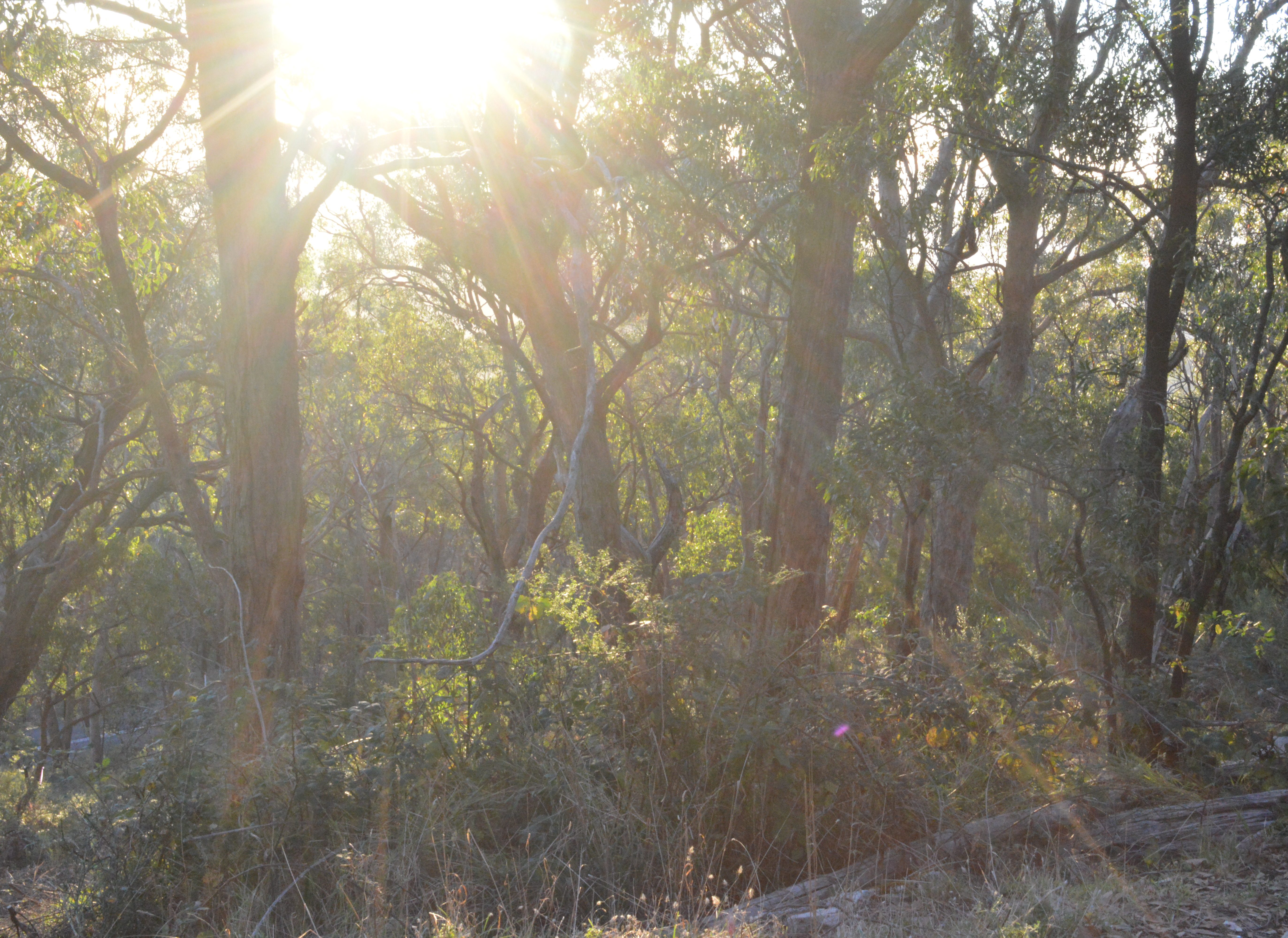
We have failed to appreciate. How often do you get out in nature and take the time to appreciate it’s infinite beauty? In the words of Wordsworth, ‘I gazed and gazed but little thought the wealth the show to me had brought’. We are not looking or seeing, we are navigating our bodies through the physical – when we need to nurture our souls through the transcendent, actively looking for those moments, those breaths of something so much more than oxygen.
Photo courtesy of S. A. Jones
How often do you think about the ground on which you walk and feel grateful for all it provides? We profess a cultural awareness of our First Nations People but why then do we not let some of their perspectives shape our relationship to this environment that we share? We have focused on owning but Aboriginal and Torres Strait Islander Peoples feel the land owns them not the reverse. These are polar opposite views – so how do we allow our own lens to be coloured with a more humble sense of place?
The earth is infinitely connected to our humanity. We co-exist. But more than this in Genesis we read that God made humans from dust of the earth and breathed his spirit into them. On Ash Wednesday (if we go old-school) we hear ‘remember you are dust unto dust you shall return’. Our nourishment spawns from the earth, our drinking water flows upon it. Yet we see earth as humble. If we consider the word humility it actually means to be made low to the ground. The closer to the earth the more humble. Think of when people used to bow before a ruler, the lower the bow the more humble. We should by nature be humble, if we do indeed stem from the humble earth, are sustained by the humble earth and eventually return to the humble earth and our bodies become one with it. We have failed to act as though we are humble. We waltz through the warm days with our purchasing power and blinkers blinding us to the wasteland we created.
We have failed to change our lifestyles, our mindsets and our consumption rates. If we keep failing to act, failing to challenge those in power to act, failing to choose sustainability over convenience perhaps some of the dystopian films will prove prophetic.
I had every intention of making my next post part 3 of the sins of omission with a focus on the environment and that is yet to come, probably the next one. After recent personal events I felt called to reflect on the ongoing abuse of power that is prevalent in society.
Power is not a gift it is a responsibility. With great power comes great responsibility but as far as I can see, instead of placing the wellbeing and love for the other at the heart of that responsibility we have placed a tick-box ‘accountability’ that is essentially a glorified justification of doing what you want and pretending it is moral.
Over time the Church has abused its power, that is a fact. Society reminds us of this again and again. But I question you Society – are you any less without blame in this area? You, who perpetuate the oppression of minorities, you who co-created this patriarchal society where being a woman becomes more of a defining quality than if you are a man? Let me explain that. We are born equal in dignity. God loves men and women equally. Yet many of the world religions have different rules for men and women. And you, Society, you define us women as ‘woman’ before you consider our other traits and abilities; whereas with men you say ‘oh he is a intelligent’ or ‘he is a leader’ or ‘he is talented’, incorporating gender in but not as that key defining quality. I am a woman. That is a fact. But I am also intelligent, a leader, talented, kind and compassionate. Why should I be pushed down when I challenge a man – I have the right to do so! And yet, from experience, if a woman challenges a man there is retaliation. It is not just within the domestic field but it is riddled throughout the workplace and the never-ending ‘boys club’ that exists and has not diminished – it has merely dressed itself differently. And you, Society, play a great role in this tragedy. This does not come from God. My God loves me. My God is with me when I am oppressed. My God is that eternal presence that gives me hope that this is not how it is supposed to be.
Currently, I am loving the music of Banners. (My children will attest to this and are a bit sick of it but hey I have to put up with their music in the car so quid pro quo child!) There is a song that to me is a conversation between me and God when I lie in bed and wonder what the hell is going on and how am I to survive this?
When the lights go out and leave you standing in the dark No one ever told you this would be so hard I know you think your fire is burning out But I still see you shining through You got it in you
I am blessed. I also have a wonderful network of friends who ‘welfare check-in’ with me daily when I am struggling in this mire that you Society allow. But what if I didn’t? I had a rude awakening the other day when I found out a friend in a distant city had been in a similar situation to myself and had attempted suicide. There is this vicious cycle of abuse dressed as professionalism that is killing people. Society is giving power to those who want it – not to those who will do the most good with it. There are many so-called leaders that I have met that call themselves Catholic and profess to be ‘good men’ but they do not walk as Jesus did. They talk a great deal but it is when you see how they treat those who do not fall in line that you see their hunger for power is at their core not compassion. Being nice to those who pander to you is not integrity – even despots and dictators do that.
so many untallied sufferings
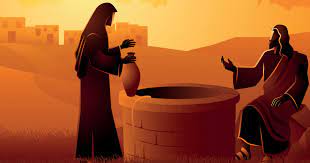
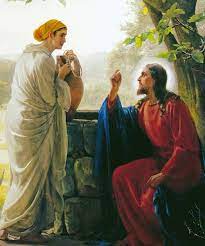
Think of the woman at the well. She was quite challenging in her existence at the time to Jesus the Jew. He, in turn, challenged her. In that dialogue I see hope.
That is how it should be that we challenge each other to be the best we can be. How about it Society? Do you think you can change so that those with power are the ones who deserve it because power is supposed to be there to protect not to make people suffer. Can you remove the disguise from the boys club that makes you Society such a hypocrite? Maybe if Society breaks this down then the Church will actually become more gender friendly as the Church exists in Society not the other way around.
Society reminds us almost daily to ‘fuel’ our bodies. That what we put into our body DIRECTLY impacts our health and wellbeing. Our physical body is positively affected by giving it the nutrients that help it function at a higher level, conversely giving it chemically evolved food negatively affects our ability to function effectively. There are needs – nutritional needs – that our body has and if we meet these we can use our bodies more to capacity.
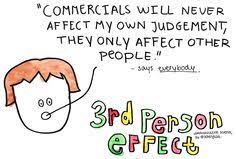
Why do we not apply this to our minds and our spirit? What do we feed our minds and spirits? We all share a common biology and the whole nutrient-in concept is accepted but when it comes to our minds and spirits we don’t apply the same parameters? As a parent driving children to school I used to be appalled at some of the topics covered and things said on radio whilst my children were in the car, there appears to be no limit on what is put out there as if it doesn’t affect us. Some people assert that nothing put out there affects us personally. There is this thing called the Third-Person Effect; the idea that social media messages impact others more than they do ourselves. Sounds a bit non-sensical to assume we have immunity when others don’t.
The reason I write this in this context is because I believe some of this is our collective sin of omission. Society had (and still has) the chance to make pornography illegal. But we didn’t and don’t. From some PD I did on the impact of pornography and the reality of it based on the resource ‘In the Picture’, I discovered some terrifying statistics. Most porn has violence towards women. Not just women – 88% of porn has physical violence but 94% of that aggression is directed towards women. Consider that alongside the fact that in Australia, intimate partner violence causes more illness, disability and deaths than any other risk factor for women aged 25–44. But we live in a society where many say they can watch it and it does not affect how they think and behave? Surely not.
In what I have failed to do …
Society has failed to protect women. We do not act when we have the chance and with this example ultimately we prioritize process and money over wellbeing and well … life. Equality simply does not exist but this threat on physical and emotional safety is something we need to address first. If sin is a moral or religious transgression and a state of sin is being estranged from God then what sort of state are we heading to if we keep minimizing the devastating impact of sin on ourselves and others? I’ve even heard women in Catholic institutions describe the porn industry as a valid workplace, that if someone chooses it and is paid for it, then this is ok.
I say no.
The ‘industry’ simply should not exist. Instead of suggesting that it is better to have some way of earning money why not look at creating other work opportunities. My criticism is FIRMLY directed at those that create the industry and promote it, not those who fall prey to life’s struggle and find themselves on screen. We are all human and do what we need to survive. The damage that this industry has on young and old is mammoth. If we look at the statistics and join the dots what can we say about the impact on society, on ourselves, on our very soul?
This brought me to a conundrum at Mass. Before Communion we say ‘Lord I am not worthy for you to enter under my roof, but only say the word and my soul shall be healed.’ I really struggled with this last weekend as I thought about the soul as that most beautiful space within where we encounter the Divine. These words at Mass seem to suggest that our soul is intrinsically broken or sick or fractured, but our soul is innately beautiful beyond our comprehension. I understand (and like) the reminder that we are flawed and need to be humble but I don’t like this suggestion that the soul -that place of connection with God – is broken. I understand the reconciliatory aspect of this prayer and that we always need forgiveness but a broken soul? The theological concepts are beyond my words (for now anyway). It is a concept that sits uncomfortably for me and I will keep thinking about it until I find the words I am so lacking right now. Instead, for now, what if we focused on what we can do to help keep our soul healthy just like we spend all this time on our bodies?
So instead of what should we not do – let us just think what we can do to be healthy? What are the ‘nutrients’ for our soul? Logically, if the soul is the space of connection with the Transcendent then there needs to be something that nourishes that landscape. Which inspirational authors, what music, what art, what activity make you feel the presence of God and calls you to be your best version of self, living out all the values that we espouse that in our daily life we struggle to fulfil in our increasingly secularized society?
There is a song by Banners called ‘Where the Shadow Ends’. Whilst not the entirety of the song applies here there is a vibe to it that just calls out to me in this conversation:
When you can’t go round and you can’t outrun
What lies behind, what stands in front
Through the broken gates of kingdom come
I will see you again when the night is dawn
There’s a darkness up ahead
I will see you where the shadow ends
Cross the badlands to rise again
I will see you where the shadow ends
As an English teacher I always appreciate the play on dark and light – it really is timeless. This part I find is timely – we are in a situation that is created and narrated to some extent by the things that have preceded us and where we are headed. We cannot avoid this context – it is in this we exist. The idea of the kingdom having broken gates I think speaks to the corruption we have seen and continue to see in our religious organisations which have continued to succumb to the trappings of power. The gate may be broken but it is still functional, but perhaps it is time to repair it. There is always going to be light and shade but there is that point where the shadow does end and sometimes we have to journey through ‘badlands’ if we are to rise again to the challenge of being Gospel-inspired people.
In what I have done and in what I have failed to do …
It is a counter-cultural thought really as we are held accountable for what we do and what we say in a legal sense in society today. How do we hold someone accountable for what they don’t do and what is left silent?
It’s a tricky landscape the sins of omission. It is both collective and individual. Yet traditionally we see sin as more of an individual thing for which each person accounts for his or her own sin. Countless times I have told children in school not to focus on the consequence for the other but to think about what they did as that is what they are responsible for and if their consequence is just and yet our collaborative sin often renders far more devastation and needs to also be addressed. It is a bit of a conundrum as we like collective justice (a sort of fairness) but it does not exist. We all carry different frailties and limits and therefore are capable of varying outcomes. Surely the focus should be on what we can do rather than what we can’t – and then do we do all we can?
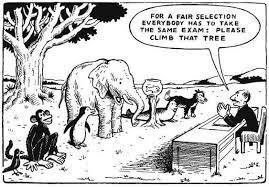
Not all tests are fair and accurate when considering the inner part of humanity
External requirements cannot be a constant. Even so, there are things that are being perpetuated into the fabric of society because we do nothing. These are our sins of omission. To sin is to go against divine law – usually we say it is a moral transgression but this is about our failure to act. Realistically if our inaction, that we have the skills and facilities to address, results in harm to others then it is sin. Ignorance is not an excuse as, just like in law, we have a responsibility to be aware. Not everyone has the same ability to do so but how do we face this in a society where people are encouraged to look after themselves first, to justify all the harmful things we do, to talk about individual truth overpowering the need to be just, to talk about an individual conscience and about intention as if that is more important than action. These are the things we fail to do. We have the technology to be informed, but we aren’t. We have enough to feed the world, but hunger still kills. Fear and hate power society instead of love and kindness. Equality is still a myth. The earth is struggling to breathe but we have the skills to save it. We are charged with stewardship of creation. Look at how we have failed there – both individually and collectively. We are supposed to keep safe the weak. And yet the elderly and disabled, women and children are frequently facing dangers from predators. Predators who are bound by the same moral code of humanity.
Matthew 16:26 “For what is a man profited, if he shall gain the whole world, and lose his own soul? Or what shall a man give in exchange for his soul?”
This part of the Gospel came out of what seemed to be a frustrated Jesus in dialogue with disciples that just weren’t entirely ‘getting it’. There was a bit of ‘pendulum swinging’ among the inner circle from their inability to understand metaphor to Peter’s declaration to then just after being called the rock, being told to ‘get behind [him] Satan’. When we are frustrated don’t we sometimes grab at language that is powerful so that people will understand at least a little? This says to me that my soul is the most important part of me. There has been much written about the soul by Plato, Aristotle and Aquinas but my contemporary view after reading them (and others) is that I am soul and I have body. I like the infinite aspect of ‘am’ whereas the body deteriorates, dies and decomposes. The soul is eternal. Or is it? Can you lose your soul (as suggested in the scripture passage above)? Or worse, can you give it away? I had been wondering if you could destroy parts of the soul but upon further reflection (on the words of those far wiser than myself) it appears that the soul is an entity and cannot be fragmented and therefore you cannot destroy parts of it, but the health of the soul or the energy or esse can diminish. If the soul is the life force that sustains our being why do we not look after it more than our body? Why do we not strive for what is life-sustaining for our soul rather than pleasurable for the corporeal?
So if the soul is where we are most in unity with the divine and sin is our turning away from the divine and that unity what can we do about it? When we say those words at Mass (or in private devotion) do we let them seep into the deepest cavern of our existence so that we can be more aware of the things that we fail to do? Society is not going to hold us accountable for these omissions as it is firmly entrenched in a philosophy of accountability – but our soul is charged with divinity and we are ultimately called to actively seek for the marginalized and to act with compassionate determination to deserve to be called co-creators of a world of which we are stewards, not owners. Let us not lose hope in our own humanity.
[I think there is much to be considered in how we address the sins of omission in a practical sense in our world and this will form part 2 (and possibly part 3) of this topic]
Women in the church (and in society) is a huge topic – one that I cannot do justice to in it’s entirety but feel like I need to address at least a fragment and give my voice, a contemporary female voice, to this topic.
The Hamilton song hits the nail on the head indirectly:
When you got skin in the game you stay in the game
But you don’t get a win unless you play in the game.
Hamilton
No female has skin in this game
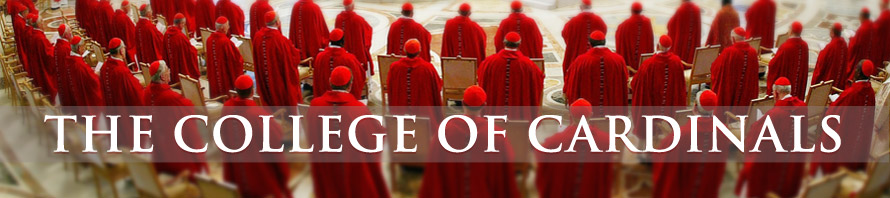
Women are not really playing in the game that is Catholic Church leadership. We need a seat at the decision-making table. I understand that this is reflective of current society, but quite simply, for an organisation that claims to be counter-cultural this is simply not good enough. The church has been run by men as far back as is documented and surely this has entrenched the hierarchical male archetype. Look at the hierarchy – the Cardinals (all men) and to be a Cardinal you need to be a Priest and women cannot be priests (apparently that is heretical and you get excommunicated for that one!) The Roman Curia with all its various secretariats are all run by men (mainly Cardinals). Where is the female voice in this – other than the one woman appointed last year to a managerial role in the Secretariat of State (and kudos to Pope Francis for doing this)? When are women going to have a seat at the table instead of being expected to clear away the dishes? When can we ‘play in the game’?
Jesus and the woman at the well
I revisited the various recounts of Jesus and women in Scripture. There was an inclusive aspect to his teaching and a ready acknowledgement of women in their innate human dignity, however, the 12 apostles were men. I spent some time thinking about that and have something to say. These accounts are all told through a male lens, the male lens that has clung to the power of governance throughout the history of the Church. There is mention of the influence of women. Women supported Jesus’ ministry, Mary was a significant influence, and Jesus interacted with women in a way that was counter-cultural, maybe their influence has been minimised in literature scribed through a male power lens? Every aspect of his ethos upholds the equal dignity of the sexes and yet 2000+ years later and we do not have equality. We do not need to be ‘looked after’ or protected from the heavy weight of responsibility – we are capable and ready. What would Jesus say today to those who perpetuate this injustice?
I really like the Wedding at Cana. Breaking it down: Mary made a decision, Jesus acted on it and all was well. Women can make decisions. She must have made many over time and who can argue the grit of this Blessed Woman who stood by her son at the Crucifixion? She found a solution and put into action what needed to occur to save the family the shame that would have been forthcoming had they run out of wine. I like Mary’s approach – she didn’t need to form a committee and have a discussion or read a proposal and it was done with discretion. Sometimes you just need to get things done.
I love the He For She speech by Emma Watson as it acknowledges the limits that befell both genders through the inequality in society. Why can’t men show emotion and be manly? Why can’t men be nurturing? Why can’t women make decisions and give direction? We are slowly moving in a direction that accepts the holistic nature of humanity rather than adhering to toxic stereotypes. It isn’t just about empowering women to lead – it is about empowering men to be compassionate and emotional.
He For She
Women are under-represented in every government. To change the world we need to have more women at the decision-making tables and until we do society will continue to perpetuate the male model of leadership as the most valued. Feminine and masculine leadership are different – don’t expect women to adopt male styles and be willing to support those male leaders willing to employ feminine leadership in their arenas. To change and grow our church we need to let women ‘be in the room where it happens’. We can all win on this one. Just as men can show compassion women can bring intelligence and let’s just remember the bible paints wisdom as female.
To reinforce the wisdom that has come from women I am finishing with one of my favourite quotes from St Teresa of Avila. These words, I think, if absorbed by the majority would render our world into the global community we often allege we have:
“May today there be peace within. May you trust God that you are exactly where you are meant to be. May you not forget the infinite possibilities that are born of faith. May you use those gifts that you have received, and pass on the love that has been given to you. May you be content knowing you are a child of God. Let this presence settle into your bones, and allow your soul the freedom to sing, dance, praise and love. It is there for each and every one of us.”
St Teresa of Avila
We need to hear these wise women more frequently, let’s give them a voice and a seat at the table where the decisions are made.
Thinking back (and perhaps showing my age here) to the 80s film Desperately seeking Susan – sometimes we are driven to seek someone and go to extraordinary lengths. To what lengths do we go to seek God?
Every now and then I take myself out into nature (often with a camera) and it is there I feel the greatest connection with the Infinite. For me, that stepping into nature is a recharge of my spiritual batteries. There is something powerful about the crunch of dirt under your shoe, the sounds and (hopefully pleasant) smells of nature, and the feel of a fresh wind in your face. When travelling (other than Disney) my favourite moments have been in nature – Niagara Falls, Ben Nevis, Connemara and Yosemite are my absolute favourites. These stunning vistas always remind me of a greatness beyond me, a wisdom I strive for but cannot fathom, and a beauty that takes my inner breath away and reassures me that the world is indeed good!
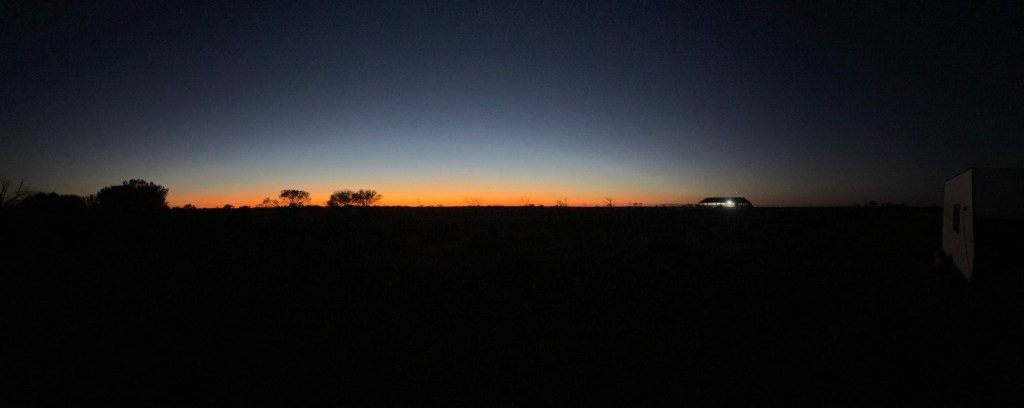
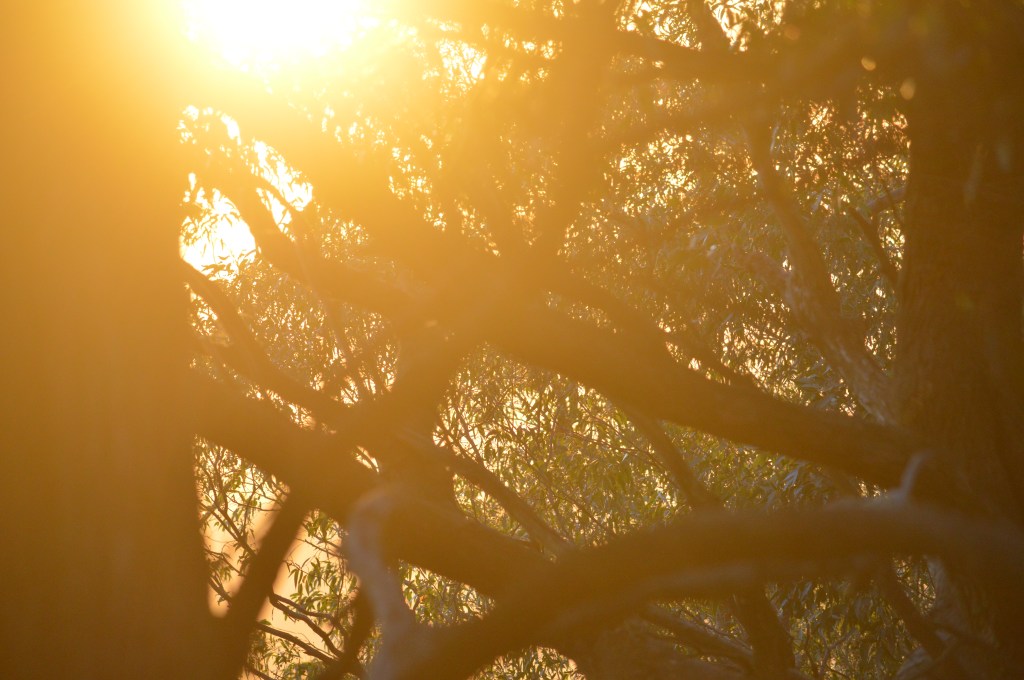
My two favourite local places are Grange Beach with the dog before sunrise and the Adelaide Hills near sunset. Isn’t there something remarkable about watching those beginning and ending moments of light? Too often we encircle ourselves in this concrete jungle of urban life and need to go in search of the ‘transcendental experience’ (thank you Rahner) to open our spirit to the infinite horizon and absolute mystery that is the divine.
I’m sure we all have a space where we can go that allows our lungs to breathe in deeply the air of hope and possibility and connection with the Infinite Other who loves us.
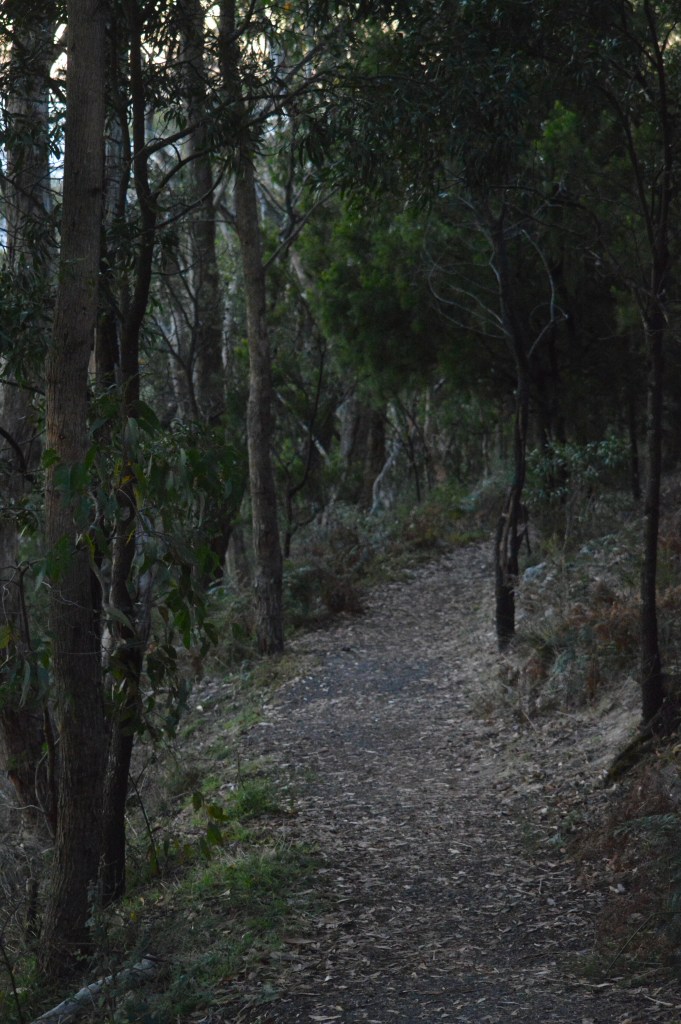
The above two photos are of the same path with the passing of time. I love how the light hits the path as the sun is setting orange in the sky – it warms the vision. When contrasted with the darkness that a lack of light generates it does look more appealing. Light as an image for God is a powerful one for me and is probably why I find myself drawn to sunrise and sunset and those moments when the suns rays are so tangible around us and show the difference between dawdling in the dark to purposefully journeying in the light.
See if you can find a spot where the sun touches the earth and maybe there you will find that connection you seek. I always do. Sometimes you need to know where to go to find that moment. It’s a bit like netball. I’m a bit of a netty fan (just a smidge) and have spent many a moment coaching and watching netball. We talk about the connection between players when they feed the ball into the goal circle. It is as if one player knows where the other will be before she gets there (it’s a beautiful thing to see on court). I think seeking the connection with God is a bit like that – these netballers don’t just magically know – they have worked together to establish that connection. So too with God, we cannot expect it just to magically work – we need to work on knowing a bit more about ourselves and a bit more about God if we are to find that connection. How we do this varies from person to person but it takes time, commitment and work.
It is worth every second for that sense of connection is beyond price.
The textbook answer would be through prayer. But prayer can be ritualistic and somewhat empty. (I don’t think this statement is heretical – I think it is honest – not all prayer is fruitful and connective and life-giving, after all Saints have bemoaned this in the past (hello – Dark Night of the Soul)). To connect involves something more (which can occur during prayer for sure) something that connects our spirit with the divine presence which is ultimately spiritual. Directing young people today to read ancient writers from contexts long changed so they can find a better understanding of God isn’t – I think- the most effective way to nurture connection. That’s an intellectual exercise which can certainly inform our sense of God but its not really stirring the soul.
Let me be frank – I do not subscribe to the charismatic variants or Pentecostal evangelicals that have you ‘speaking in tongues’ and ‘falling down in the spirit’, just a little disclaimer right now before you read the rest of this and wonder if I am actually Catholic (although fyi there is a branch of Catholicism that taps into this – I once went to their Easter camp and the music was phenomenal). I do think that connection is intrinsically personal and logically it has to be different for each individual so perhaps writing about connecting with God in general is pointless – but if my thoughts offer food for thought then it is time well spent.
Any stimulation that draws you inward to that indefinable sense within helps you to be open to connect with the divine presence, as long as it is connected to God and to you.
Prayers are often written by someone else – it becomes personal when you connect to the context. For example Christian music. This is something those pentacostals do so well. I’m actually going to refer to 3 specific songs by different organisations – which is going to make this lengthy but I feel it is important and each one touches on a different aspect of connection.
There is a song by Bethel music called ‘Raise a Hallelujah’. The most powerful version I have seen was a live version when Jonathon Messler explained how the song came to be written as a prayer. It was a response to a situation when a child’s life was in danger. It pulls on the heart strings. As a mother there is no greater fear than something happening to my child.
I raise a hallelujah in the presence of my enemy
I raise a hallelujah louder than the unbelief.
Hallelujah is a cry of joy and praise and I’m sure we all have moments when it feels like joy is far from the present and we wonder how we will ever get through. This is a defiant hope for a better tomorrow. For when it seems that there is no way forward ‘I raise a hallelujah’ says to me that I know that I am struggling but I also know there is something far greater that I can draw strength from. It’s not a fairy godmother approach where prayer brings an action from God, its more about us and the strength we need when we need it. It takes me back to one of the Psalms – Psalm 31 to be precise. David was in a bit of a pickle. His own son had turned against him, he was surrounded by enemies, his neighbours and friends wanted nothing to do with him and he was facing defeat. The odds were not in his favour. And yet, in this dire time he calls out to Yahweh and affirms his faith. He draws on that deep well. There are many translations but I do like the line ‘Have Courage and Take Heart’. It speaks of hope. And from hope comes courage. And it takes courage to ‘raise a hallelujah in the presence of my enemy’.
The second song is ‘The Blessing’ by Kari Jobe and Elevation Worship. I’ve always loved Celtic Blessings – not just Irish but lots of terrific Scottish ones as well. This song also has a narration at the start where Jobe explains how the song came to be, as a group effort, trying to ‘go in after the presence of God’. The resulting song is remarkably repetitive but incredibly effective. It draws on Scripture but it is the use of ‘Amen’ that really stands out to me. The Blessing is about God turning his face towards you, blessing you with grace. Who doesn’t want to be smiled upon by God? Then comes the Amen. Amen means so be it or I agree. It is in a way an acceptance of the blessing and also when thinking of the blessing going to others a sort of ‘please let it be’. Then as the song builds the words say:
‘May his favour be upon you and a thousand generations
And your family and your children and their children and their children
May his presence go before you, and behind you and beside you
All around you and within you he is with you
In the morning in the evening
In your coming and your going
In your weeping and rejoicing
He is for you.’
This is a prayer I think we can all tap into. Don’t we hold loved ones in our hearts and hope for them to be well. In this global age (especially now with covid) we seldom see those living in various corners of the globe. This song taps into that essential desire to not be alone (which we are not as God is with us in our ’coming and going’ and our ‘weeping and rejoicing’ which are essentially dichotomies and so constitute a whole), and into the desire of the heart for loved ones to be ok. The sung Amen is important as it is an act of will, it is like we are willing it to be.
The third song is one of my all-time favourites. I’m going to give a plug to the music department at St Paul’s College who, with vocalist Joanna D’Angelo have done amazing renditions of this song. Oceans (where feet may fail) by Hillsong. The title straight away takes me to St Peter trying to walk on the water with Jesus and only lasting a second before sinking. Again this is a long song (sorry-not sorry) with different sections and some amazing building. Additionally, the ocean for me is an image of the unfathomable which always connects me with God. I feel a certain sense of spiritual connectivity near water as there is so much I do not see and do not know. One of the lines ‘You call me out upon the waters’ reminds me that we all have something to do in this world – this can be challenging. Isn’t this often a lifelong struggle to find what our purpose is and then to actually do it. The song goes on to say ‘I am yours and you are mine’ – again this is that sense of being connected to the divine. My favourite part connects to this:
Spirit lead me where my trust is without borders
Let me walk upon the water, wherever you would call me.
Sometimes, when you feel a call to do something it is hard. It is frightening and sometimes goes against the current social norms, so do you do it? This prayer says that we can gain strength from the great infinite and do great things for the benefit of all.
All 3 songs offer hope and strength in difficult times (in different ways). This is – I think – the core of prayer today – in a world where secularism and materialism are dominant spiritual strength is what is most needed and essentially most radical.
So if you are looking for food for thought or ways to connect with God – give contemporary Christian music a listen – it may take a while before you find one that speaks to you but once you do you can listen to it over and over again. 😊
Would it matter if I called the woman who brought me into the world mother, mum, mummy or Patricia? It wouldn’t change my intrinsic connection to her. With that in mind, and a basic concept of God as Creator and humanity and the world as part of that creation, does it matter what we call God, would that change how we connect?
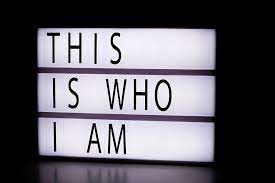
In the Bible the word Yahweh appears many times before Moses asks for his name. ‘I am who I am’ is God’s reply and then he says, ‘This is my name for all time; by this name I shall be invoked for all generations to come’. Interestingly enough I believe I have, on more than one occasion, said (both internally and aloud) ‘I am who I am’. Life experience has led me to the conclusion that I am who I am and whilst I may change aspects of myself and that ‘am’ may change with personal growth it is a statement that is a tautology. What is significantly different between my saying it and God saying it as an answer to Moses, is that I don’t know every single part of my own being – each day is a learning experience about my world both outer and within. I’m assuming the omniscient divine presence absolutely knows its own infinity.
In Christianity we frequently refer to God as Father. This stems obviously from the Gospels where Jesus tells his followers to pray and names God as ‘Our Father’ and then as ‘your heavenly Father’. But consider the social circumstance of the time – what did the role of a father entail? It isn’t the same today – time has changed society in so many ways. The father back then was the authority of the household, the provider, the protector, the one who carried the responsibility and was owed absolute respect and honour. It was not his role to amuse a child or provide physical care for an infant but today we take paternity leave etc so why can we not move beyond this image of God as father? There is nothing wrong with this image of God but it cannot be ‘it’. Personally, I find a sense of protection and care with God that does remind me of the safety I felt as a child when I had a bad dream and my father was in the house, there was a comfort and a sense that I would be protected from any evil force that tried to harm me (I had a recurring nightmare about a witch).
There has been much said and written about the ‘sexist’ nature of Christianity (more on that in a future blog) and much has been identified in the Bible that highlights nurturing qualities of God and the image of God as a mother (especially given the Creator God image). Is there any harm in referring to God as she? I don’t think there is – but that is just my opinion – but it is an opinion based on a lot of reading and reflection, but still an opinion. I see no conflict in using the prayer ‘Our Father’ and still calling God she. I love that the Bible presents the quality of Wisdom as female and wisdom is both an attribute we associate with the divine and one of the gifts. Wisdom is an interesting topic for reflection because in the Book of Wisdom the author clearly presents it as divine even though referring to this strength as ‘she’. So really we have learnt to name the divine by the term that states its identity, roles which mirror aspects, and strengths that we believe stem from this being. So why not say God is Creator, God is Our Father, God is Maternal, God is The Wise One? The divine presence is beyond our ken, so who is to say this is wrong? As humans we have to find what makes sense to use both intellectually, emotionally and spiritually.
According to Scripture we really only have the one name for the Christian (Jewish, Islamic) god and that is Yahweh. But then when we look at that really when Moses asked for a name he got the answer ‘I am who I am’ which was then shortened to Yahweh – so technically we don’t actually have a name (as we understand names) for this divine presence. So does it matter what we call God? I tend to flip around between God and the divine presence or the Transcendent Other – but if I don’t have to say it out loud the name for me is irrelevant – isn’t it really about a spiritual connection?
Why do we need a name?
Our view of the significance of a name has changed over time. Think back to Arthur Miller’s The Crucible and John Proctor’s cry:
Because it is my name! Because I cannot have another in my life! Because I lie and sign myself to lies! Because I am not worth the dust on the feet of them you have hanged! How may I live without my name? I have given you my soul; leave me my name!
John Proctor, The Crucible (by Arthur Miller)
Our name used to be indelibly connected to our identity and it was how we were known – in some instances reputation is still inflated in importance if we look at social media and the way in which people search our name in their cyberstalking ventures.
Today, we use people’s names to acknowledge, to communicate, to connect but it is also still a part of our identity. As an educator I have to learn lots of names every year and in a relational sense knowing someone’s name matters. Remember the theme song from the TV Show Cheers?
Sometimes you want to go
Where everybody knows your name,
and they’re always glad you came.
You wanna be where you can see,
our troubles are all the same
You wanna be where everybody knows
Your name.
It’s human that just as we hope God knows our name – we want a name in return, but ultimately this influences our perception of the relationship. What if the greatest connection is when we close our eyes and just know to whom we communicate? Those moments when words are not needed and ultimately not enough. But we are human and so we need both, the spoken and the unspoken.
Have we allowed our words to define what is indefinable?
I am an educator with a strong background in religion.
I have spent many years studying religion, philosophy and theology. For example I was taught Canon Law by a Dominican Canon Lawyer, I learnt about the politics and environment of the Holy Land from a Franciscan Father who was Parish Priest at the Holy Sepulchre in Jerusalem, I was taught Christian and Jewish Scriptures by experts one-one-one. Additionally, I have read a great deal on Western Philosophical Thought, Aquinas, a range of theologians and spiritual reflections.
I was brought up Catholic and am still. I find that there is a lack of really inclusive and contemporary thought that speaks to me so I felt deep within I had something to say and so decided to do this blog.





 The Female Theologian