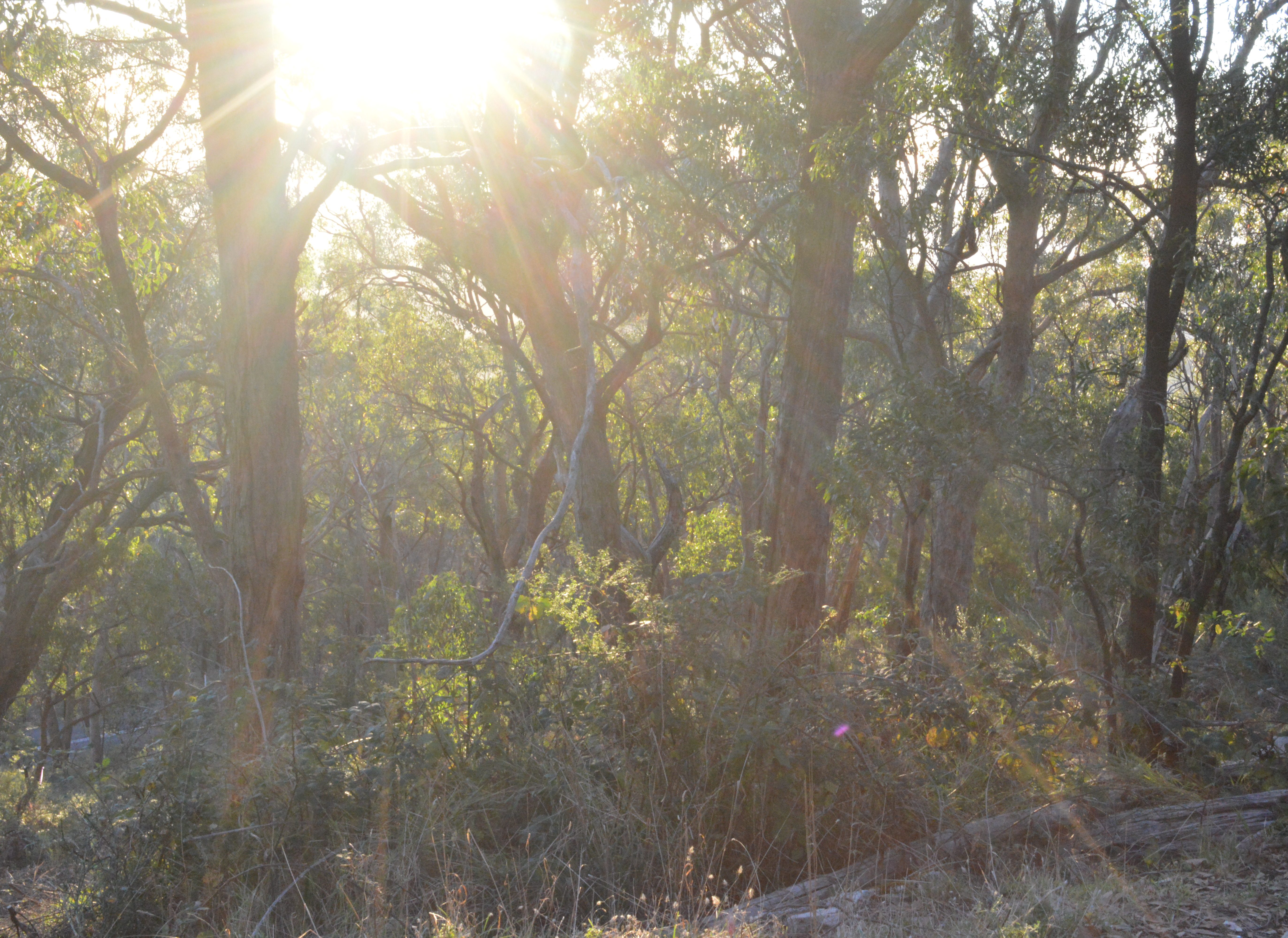
There is a particular kind of wisdom that begins by looking down.
Not in shame, not in fear, in attentiveness.
We spend so much of our lives looking ahead: toward the next task, the next relationship, the next crisis, the next version of ourselves we are hoping to become. We are encouraged to keep moving, keep climbing, keep improving. But Scripture, in its earthy way, often invites us first to notice where we are.
“Take off your sandals,” God says to Moses, “for the place where you are standing is holy ground.”
Before Moses is given a mission, before he is sent to Pharaoh, before he becomes a liberator, he is asked to become aware of the ground beneath his feet.
Holy ground is not always obvious. Sometimes it looks like wilderness. Sometimes it looks like grief. Sometimes it looks like the kitchen floor after an exasperating day, the hospital corridor, the classroom, the office where you swallow your words, the church pew where you wonder why you are there.
The ground on which we walk shapes us. Literally, yes. The places we inhabit form our bodies, our habits, our sense of what is possible. But there is also another kind of ground: the ground on which we stand metaphorically. The assumptions we carry. The histories we inherit. The privileges we may not notice. The wounds we protect. The theologies we were handed before we had language to question them.
To be spiritually awake is to become aware of both. It is to ask: What ground am I walking on? And also: What ground am I standing on? Because none of us stands nowhere.
We stand on family stories, cultural scripts, religious traditions, economic realities, racial histories, gendered expectations, and personal experiences of love or harm. We stand on what we have been taught about God, about ourselves, about whose voices matter, about whose pain is believable, about whose bodies are safe.
And so does everyone else.
This awareness should humble us. It should make us slower to condemn and quicker to listen. Not because every position is equally just or every belief equally harmless, but because people do not arrive at their convictions from thin air. They stand somewhere. Their fears and their hopes have roots. Their prejudices and their courage. Their silence and their resistance.
To understand the ground on which another person stands is not to excuse harm. It is to refuse shallow seeing. Jesus was remarkably attentive to ground. He noticed where people were standing socially, spiritually, and physically. He saw the woman at the well not merely as a Samaritan woman, but as someone standing at the intersection of gender, ethnicity, religious exclusion, thirst, and longing. He saw Zacchaeus not only as a tax collector, but as a man perched above the crowd, wealthy and isolated, complicit and curious. He saw the woman bent over for eighteen years and understood that her body, her community, and her dignity were all involved in her healing.
Jesus did not flatten people into issues. He met them on the ground where they stood, and then he invited them onto different ground. That is the work of love. Not sentimental love. Not love that avoids truth. But love that pays attention before it speaks. Love that asks what histories are present in the room. Love that knows liberation requires more than telling people to move; sometimes it requires naming the terrain, exposing the systems, and helping one another find solid footing.
This is especially important for those of us who speak of justice, faith, and transformation. We can become so certain of our destination that we forget to examine the ground beneath our own feet. We can critique others’ assumptions while leaving our own untouched. We can call for humility without practicing it. We can speak of the marginalized while standing comfortably at a distance from the cost of solidarity.
Awareness of our ground is not self-obsession. It is moral responsibility.
Where do I have stability that others have been denied?
Where have I mistaken my experience for universality?
Where has my theology been shaped more by comfort than by Christ?
Where am I standing on someone else’s displacement?
Where have I inherited ground I did not earn?
These are not easy questions. They are not meant to be. Holy ground often burns. But awareness is the beginning of reverence. And reverence changes the way we move.
When we know the ground is holy, we tread differently. We stop trampling. We stop assuming that speed is the same as faithfulness. We begin to notice whose footprints have been erased, whose labour made the path possible, whose bodies were buried beneath the road we now call progress.
And when we remember that others stand on complicated ground, we become more patient without becoming passive. We can challenge injustice while still seeing the humanity of those entangled in it. We can name harm clearly while understanding that transformation often requires more than argument. It requires encounter. It requires truth. It requires grace with a spine.
Perhaps this is part of what it means to walk humbly with our God. Not to walk timidly. Not to walk without conviction. But to walk with an awareness that the earth is layered, that every person is storied, and that God is already present in places we have not yet learned to recognize.
So before we rush forward, perhaps we might pause.
Look down.
Notice the ground.
Ask what it has carried. Ask what it has cost. Ask who stands beside us, and what they are standing on. Ask whether the place we occupy has made us more compassionate or merely more certain.
And then, barefoot if necessary, take the next faithful step.

