Losing something (or someone) can be the greatest challenge. Sometimes, you can restore and locate, other times, you have to learn to move on without that person. Even when it is a person, and they will never be there again, we seek to find something to fill the gaping hole left behind.
In the Parable of the Lost Sheep we here about the importance of finding that one. But it is not just any one – it is one that once was there and belonged and was loved. It has so many layers of meaning but today I reflect on the importance of the search.
We could bemoan the loss, and accurately state that they are lost or no longer there. This would be factual. It is not helpful though. We need to seek ways to stay connected to the memory in a healthy way. It has been nearly 13 years since I lost my mum and I miss her every single day. I bet there are so many who can relate to that feeling! But it is only with time that I have sought to keep her spirit connected with my evolving life instead of bemoaning her absence, and this affords me the luxury of bringing her memory with me into the now. The love she gave me is with me yet because love is not bound in our mortal bodies. We need to remember that love belongs in the spiritual realm and does not die. Love does last forever if we let it.
At Mass this evening the response for the Psalm was about praising God for he was good, ‘his love is everlasting’.
I thought about that last phrase.
Love is not restricted to God. We love. So what makes his love ‘everlasting’ or beyond our human capacity? Surely my love for my child is everlasting? Well, I like to think so.
What is it about God’s love? Is it the unconditional component? Probably not what sets it apart as I believe I love my children unconditionally. Is it the infinite scope? Possibly – I am finite (although I do not believe my love for my children is limited but I have to bow to the fact that I am finite, therefore my love is potentially finite, it ends when I die. Or does it? What of the soul? Surely I love my children in my soul? Complex indeed.
Perhaps it is the tangible notion of God’s love that defies our human love? An entity in its own right. Perhaps it is the transformative power of God’s love? I really don’t know. But I do know that the phrase stuck with me for a reason. And time spent pondering the love of God is never wasted.
In the Gospel of Mark (from Palm Sunday) we hear, ‘And the curtain of the temple was torn in two, from top to bottom’. Now this was no mean feat! Traditionally, according to the Talmud, the veil of the Temple was about 10cm thick; it was to separate mankind from the Holy of Holies, symbolically representing the separation between God and mankind. So, with that in mind, my brain turns to the idea that we can find God in the everyday because Jesus on the cross tore that veil in two. Have you ever had one of those random moments where you just felt the presence of something so good, so beyond comprehension, that had no explanation? We need to celebrate those moments, those reminders that God is with us. Just as Jesus entered so fully into our humanity that he felt the depths of desolation on the cross, crying out ‘My God, my God why have you forsaken me?’, so too, his sacrifice brings us the gift of Salvation and the grace to find the divine in the daily.
There is so much in our daily lives that begs the question of perspective. From my experience, I get asked some strange questions (from children and adults alike). When the moments of life mount up and you just wonder ‘what the hell?’ I like to get out into cool fresh air, minimal sounds, a sky that knows no limit and just be. It is often there that I feel most keenly the divine.
Whilst we need to find the divine in daily life (for our own spiritual wellbeing) we also need to honour our sacred spaces. I am privileged to have ready access to a sacred space and love that moment when I pass through the door from the profane to the sacred. Take the time post Easter to sit in a sacred space and feel the peace within.
For a while the ‘soul’ translation at communion ‘and my soul shall be healed’ has not sat well with me. (I could say it has not sat well within my soul). I go back to Augustine and the duality of the soul and the body, and Aquinas and the idea of hylomorphism and the duality where the soul is immortal but the two are infinitely connected. I am drawn, however, to the idea that I am soul but I have a body, which furthers this idea of connection. I wonder about the Aristotelian view that formed Aquinas and the sense that the soul cannot exist without the body – but if this is true how then is the soul immortal? If the soul is immortal and the body corruptible then how can the body be immortal like the soul and if it is not – then how can they be so infinitely connected?
Then though, especially at Easter, when we remember the humanity that Jesus had, I wonder about the importance of the body in all this. We talk about the body being a temple but in reality it gets hit with a lot of crap. It is a reminder to be more aware and mindful about what we do, think and say.
In 2019 the Pope and the Grand Imam signed a document on Human Fraternity. It acknowledged the deep connections shared across humanity. So where does that leave the idea of soul? We are connected as humans, are we connected in our humanity with our souls?
Why is ritual so important? We don’t necessarily acknowledge its importance but it is vital. We ritualise so much that matters. When we lose someone whose departure from our daily lives impacts who we are, we create rituals to enable moments when we feel their presence. We participate in religious rituals that comfort us about who we are and how everything works (or should work).
There are so many rituals over the Easter weekend. If we wish, we can celebrate Holy Thursday and the Last Supper etc, Good Friday and the harrowing crucifixion, Easter (either vigil or Sunday) and all the symbolism of new life and hope. It’s a big and ritualised weekend. My experience in Australia, however, is that people may attend a service but the focus tends to be on time with family. The secular and the religious only partly align. Easter is all about chocolate in Australia, and time with family, camping is huge this weekend.
Easter is simply the most sacred time in the Christian calendar. It is not simply chocolate! There are so many aspects that can be reflected on at various points of life, it’s a dynamic celebration that changes and shifts throughout life. I have certainly found different elements at various stages. Ultimately, its about that amazing sacrifice, that great gift of love, that is unfathomable, incomprehensible and without measure.
I ritualise a few things. In particular, I ritualise things to do with my mum, whom I miss every day. This helps me navigate the loss. Rituals are healing in a way. They also prompt resilience and growth. We need rituals today. There is so much in society that needs resilience and growth through adversity. Too often, we rescue and avoid consequence rather than learning how to work through it. Rituals help when we hit the bottom – but then we need the freedom and reality to hit that rock. How else do we rebuild?
We prepare to celebrate Palm Sunday this weekend. So much can happen in a week! It seems bizarre to go from waving palm branches and shouting ‘Hosanna!’ to ‘crucify him’, a punishment typically reserved for crimes that threatened the Roman Empire and associated social order. Yet, in a way, Palm Sunday was the moment that sent a soldier or local out to cut down a tree. Jesus went to Jerusalem to celebrate the Passover, a festival that celebrated the freedom from slavery and oppression, whilst living in occupied territory. Tension was rife as people wanted the leader to emerge who would deliver them from the Romans. The population in Jerusalem would have doubled for this holy festival, which would have only escalated the concern of the governing power for an uprising, or at least some form of unrest. It is hard for me to imagine what that week would have looked like.
Jesus was no political candidate. His approach transcends the political, aiming for a change that is both internal and eternal, while political candidates focus on external and temporal changes within the framework of government and society. The revolution he offers starts within with a change of heart, a ‘metanoia’. We are called to repentance, to that deep transformative change within. This change is both personal and communal, affecting not only individual hearts and minds but also the ways in which communities understand justice, mercy, love, and forgiveness.
Then we come to Holy Week. I wondered what did Jesus do in this time between Palm Sunday and Holy Thursday’s Last Supper?
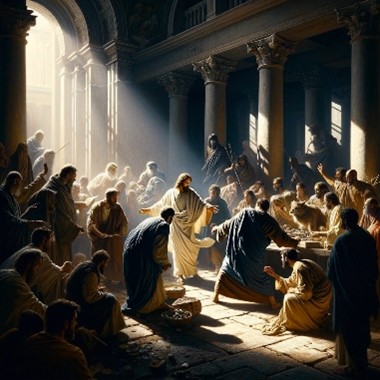
Monday: Cursed the barren fig tree (Mark 11:12-14, 20-25); Cleansed the Temple overturning the tables of the money changers etc (Mark 11:15-19).
Could we consider on this day the fruits of spirituality and how to nurture them and how to avoid the commercialization of religious practice.
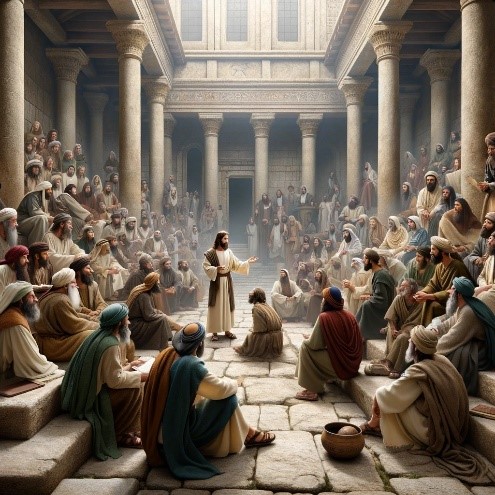
Tuesday: Taught in the Temple- Parable of the Tenants (Mark 12:1-12), Parable of the Wedding Banquet (Matthew 22:1-14); Prophetic discourse on the Mount of Olives, in which he foretold the destruction of the Temple, the signs of the end times, and his second coming (Mark 13, Matthew 24, Luke 21) – busy day!
When, like the Pharisees and (at times) the disciples do we ‘get it wrong’ and fail to hear the true message? Maybe we could pray on this day to be gifted with the grace of wisdom and discernment that we may more readily see the truth.
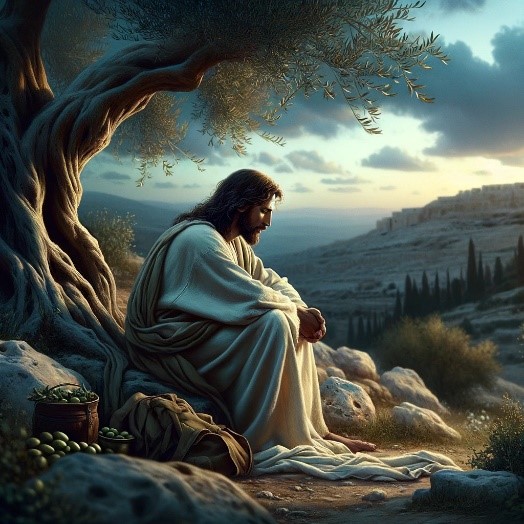
Wednesday: Not sure. It’s believed that Jesus spent this day in Bethany, resting and preparing for the Passover. However, this day is also traditionally associated with the plot to arrest Jesus, where Judas Iscariot conspires with the chief priests to betray him (Matthew 26:14-16).
As we head into the most sacred time of the year how do we take time to prepare in a spiritual way? Maybe on this day we can think about what spiritual practice we will undertake on each day of the Paschal Triduum so that we may refresh our relationship with God.
Here in Adelaide we have just had a stretch of hot weather and it drains energy and renders many fatigued. It got me thinking about different types of fatigue. And what of spiritual fatigue today? What does that look like and how prevalent is it?
In an individual and personal sense I can say that there are times when I feel disconnected from my religion and the practices that usually remind me of what I believe and who I feel called to be. They are the times I know I need to get out in nature and recharge my spiritual batteries (so to speak) as I know that usually works for me. There are times when others have prompted me to do this as, realistically, when I am really exhausted spiritually, I lack the cognisance to make good choices.
I am aware that the recent child abuse scandal in the church has caused significant spiritual fatigue (if we take the meaning of spiritual fatigue as feeling disconnected from one’s sources of spiritual and religious strength). This awareness comes from conversations but is also reflected in church-going statistics. It is hard to keep reconciling your beliefs in a church where leaders (and those we have thought were to be trusted) have behaved in such a heinous manner to those whose innocence should have been treasured. The thing is though, again I go to the numbers, these men are a minority.
How do you, continue to look past the human failings that riddle a religious institution and keep faith? I think we need to remember that it is in God we trust not man. And for all the flaws in our church there is so much good. It is a funny thing faith. Almost by definition it defies explanation, but it holds a place at our core, unshakeable for the most part. We must learn how to renew when it stretches to breaking point. A bit like finding somewhere cool in a heat wave.
Spiritual fatigue is something that any person can feel. It is unbound by religion. It stems from the generally accepted approach that really – humans are more than cells. Thereby, that thing within that defies clear definition and spurs us on is our spirit. Thereby, we all have a spirituality. Therefore, we can all experience both spiritual elation and spiritual fatigue. We all can lose our sense of purpose and meaning. How do we recover this? How do we renew? How do we support those around us to do this as often when you are that fatigued choosing a renewal is a logic that stems not from exhaustion.
Who do you see in your circle in need of renewal? We say it takes a village to raise a child, well I think it takes a community to save your spirit.
Sunday marked the beginning of the third week of Lent. It seems that it was not long ago that we placed ashes on our foreheads, reminding us of our mortality (unto dust we shall return) and the Lenten summons to repentance, made tangible in our fasting, almsgiving and prayer. Particularly striking this week was the Gospel story of the Samaritan woman at the well, a narrative that gains additional significance against the backdrop of International Women’s Day. Celebrated as a foundational text by female theologians for its challenge to patriarchal structures, the story illuminates Jesus’ radical acceptance of the woman whilst acknowledging her humanity. Her profound belief and enthusiastic proclamation of her faith inspired not just her, but also her entire community, to seek Jesus. There are so many different aspects that one could focus on in this story around the cultural context of this meeting but today I want to focus on the idea that here was a flawed person, who was critically viewed, but felt acceptance from Jesus, and that sense of love prompted her to a joy that she could not contain.
Lent, therefore, unfolds as a season not solely defined by sacrifice but also by the substantial gains we make: a heart resonating more closely with the divine, a spirit that resists the lure of sin more robustly, and a life that mirrors the brilliance of Christ’s light more vividly. This season beckons us to live out our baptismal vow of holiness, embarking on a conscious path of metanoia—a transformation that is both deeply personal and shared within the community. Through this purposeful journey away from sin and its myriad effects, Lent offers us a potent opportunity for spiritual revival, drawing us closer to God and the hope imbued in Easter’s promise.
This past Sunday also brought us the first scrutiny of the elect. The liturgy’s prayers during this part underscore the critical theme of liberation from sin and its repercussions—a fitting reflection during Lent. They remind us that our deeds, words, and thoughts possess the power to free us. Lent challenges us to seek liberation not only from our personal sins but also from the pervasive consequences of sin that affect our relationships and communities. In this season, fasting, almsgiving, and prayer emerge not as ends in themselves but as means to achieve true freedom, paving the way for grace to flourish within and around us. In embracing our Lenten disciplines, we discover Lent’s true gift: the spiritual renewal that draws us ever closer to the divine embrace.
This Sunday’s gospel (2nd Sunday of Lent) tells us of the Transfiguration. The three disciples gain a glimpse of divine glory and whilst their ability to comprehend is limited (human limitation) they know it is amazing and want to stay in the moment. God’s glory goes beyond human comprehension.
When we catch glimpses of God we are reminded of the need to transform. Too often we focus on transforming the world, or other people, without first starting with self. It is only when we focus on self-transformation that we can truly impact on those around us, and further on the world in which we live. We need to see the image of God within first so that we can strive for enlightenment in our lives.
Prayer is key. Prayer reveals God’s grace and beauty. Prayer is an encounter with God who speaks with us (if only we listen). We are all different and called to varying forms of transformation (it’s not a one size fits all scenario). We go to God with our struggles, and we go away with the strength to face them. Transformation is not an easy path, it is a mountainous climb, but just like the disciples, perhaps we will catch a glimpse of what is truly good when we keep climbing.
The Season of Lent is both a challenge and a gift. Sunday’s gospel takes us into the desert and the challenge of temptation. Just like Jesus, we encounter moments where we need to make a choice. Sometimes we know what to choose, but in those moments when we pause and uncertainty silences our own moral compass whose voice do we hear? There are many voices that surround us today, some loud and some barely a whisper, but which ones do we look for to listen to in this time of renewal? To what extent can we actively try to listen for the voice of God reminding us who we are at our very core, instead of the voices of temptation leading us away from the path of Truth?
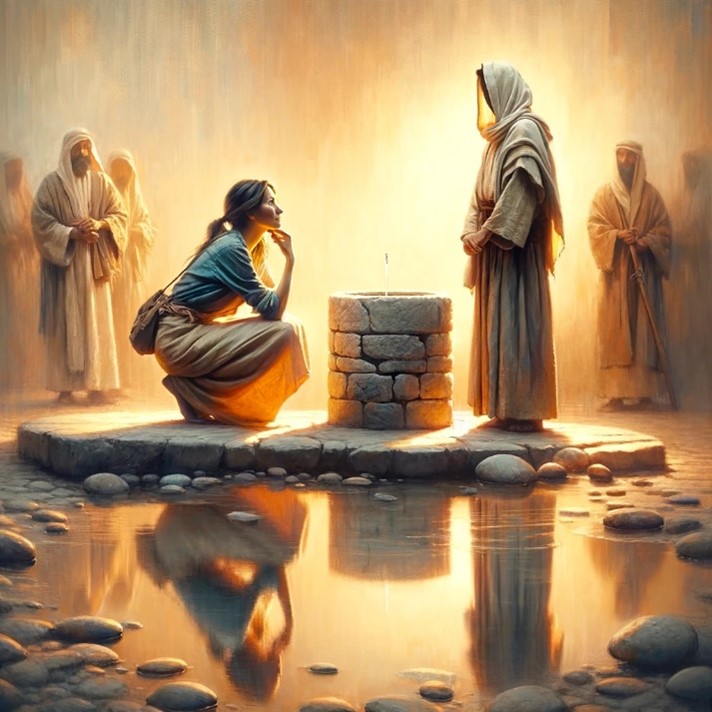
 The Female Theologian