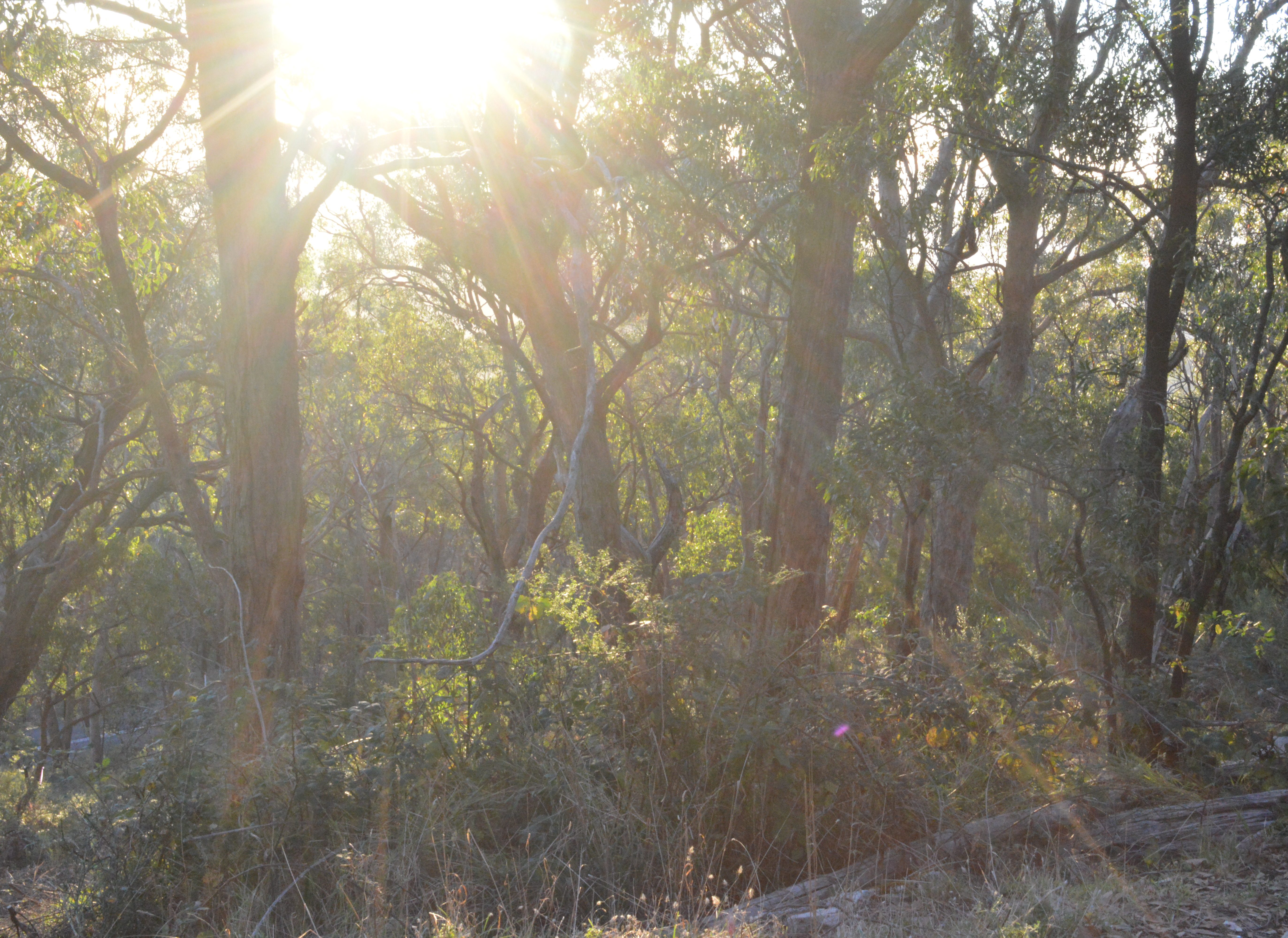
Be Present Today

We live in a world moving at break-neck speed where rushing from event to event is common and the congestion on our roads attests to our movement. Pollution rises, our patience wanes, everything blurs into a cacophony of sound and colour. We chase that next beautiful thing before we finish the moment we live in. Then the sun sets and the sun rises.

We run through an era drowning in technological wonders. Our phones, laptops, streaming, automisation, gadgets, digitally connected whilst physically alone, globally engaged whilst unable to dialogue at home. Then the sun sets and the sun rises.

We grow our number of cyber-friends in parallel with our loneliness, running through a tunnel of social media that says we are connected and yet we lie in our bed at night and wonder about who we really are, wanting to be known but terrified at the thought of our truth being rejected. Then the sun sets and the sun rises.

We tick the boxes of our faith to ease our conscience, our parents, our families, our communities, our minds – but what of our hearts that yearn for that moment of stillness, that moment with a God who speaks with a quiet and gentle voice that we vaguely remember from some time past, or some time within. Then the sun sets and the sun rises.

We build our relationships in our heart but not in our daily existence. We need to be present to understand the joy, the sorrow, the need of the moment. If we stop for a moment and truly listen what will we hear? It’s all about a moment – can you spare a moment and just be. For regardless of our pace, whether we are frantic or slow, the sun will set and then the sun will rise.

May God bless you on your journey to be present in the moment and deepen your faith in His love.

Love

We are told in the Christian Scriptures that God is love. John puts it beautifully in his letter:

Beloved, let us love one another, for love is from God, and whoever loves has been born of God and knows God.  Anyone who does not love does not know God, because God is love.

1 Jn 47:7-8

Love is such a complex word. We use it in so many situations but surely it’s true meaning is bound up in that sense that goes to the very core of our being, rather than an immediate fancy or enjoyment. As many will affirm, there is an infinite capacity within the human person, should they choose to tap into this, to love deeper and deeper, even to an unfathomable and seemingly infinite point within.

Just as we can love without a depth of reason, so too can our hearts break with unfathomable and indescribable pain. Perhaps it is to safeguard ourselves that we shy away from that sort of love. For those brave warriors who climb to the zenith of love only to plunge into the abyss of pain, we admire you. Many fear to do what you have done, to love so deeply and without reserve. We need such warriors in our world or we will slowly trudge towards complacency and a shallow breath of life, rather than inhaling deep into our lungs the tingling sensation of fresh oxygen.

To every true warrior out there – I salute you. May you smile the breadth of the world again.

Be Present

If we are to be present in our world we are therefore more aware of what is going on in our society. To be present in this sense is to turn up. We need to continue to ‘turn up’ to our world so that we can raise our voice, raise awareness, raise funds to remedy the injustices that shape the situations of many.

When we focus on being present in the moment we become more aware of ourselves and who we are, what matters to us and what we believe in. This reinforces our connection with the divine who is omni-present. This is the spirituality that sustains us in times of light and in times of darkness.

How will you be present today?

Prayer

I have been thinking a lot about prayer lately. The difference between individual and communal and also how important prayer is in human development, also how communal prayer is directed.

Personally, I find the connection that prayer is supposed to create most abundantly out in nature. Within the hallowed walls of a church I find it really depends on the aesthetics and the person leading the prayer. I love an old church that sings of history and years of spiritual connection lining the walls.

Ultimately it starts with me (or you). It starts with the person. As a regular church-goer I have times when I turn up and go through the motions – which renders me little spiritual insight.

But why is prayer important? It is the language of our souls. Tradition teaches us the language of communication with the divine and offers us a sense of understanding the connection that we feel, that perhaps we do not have words to render. Would my adult spirituality be as it is had I not learnt the traditional prayers and rituals as a child? I think it formed me and has enabled me to find that connection beyond set words and walls. There is something significant in learning to pray as a child and this plants a seed that has the potential to grow all the way through life. I no longer need words and am comfortable in the unknown and indescribable. I highly doubt this would be the case had I not previously developed my understanding of my faith Tradition and the first steps are learning the words of traditional prayers so that I found that I could communicate with the divine. Believing that God wants to communicate, is present in my life is a key factor in my ability to pray in many different manners today.

Whilst individual prayer is my preference, I value communal prayer. It connects me to something larger than myself and reminds me that I am not alone in my beliefs and this is incredibly reassuring but also allows me (almost) the freedom to seek self-expression in my individual prayer. The two are vastly different but in no way contradictory. In a way they sustain the other – although I don’t quite know how to explain that!

Grow the gold

Recently I attended a funeral. Death is that one thing we cannot avoid.

It was a beautiful Mass with thoughtful readings, thoughts, reflections and music. No matter how lovely it was or how celebratory (in the sense of celebrating the person and her life), it signaled the end of her life on earth.

Sometimes, when there are times of sickness, we suggest that death is a kind release. Even when our rational brains attest to this, for some reason our eyes still well with tears and the ache in our heart is tangible. The heart needs to grieve.

As I farewelled someone else’s mother, my own heart stirred in sadness at the absence of my own mum. We are fast approaching the twelfth anniversary of her passing. For some reason the quote ‘nothing gold can stay’ from Frost has been wandering around the cavern I occasionally call my brain since that funeral. Sometimes, it seems that what we cherish is fleeting. Then I thought about it and edited this thought. The ‘gold’ of our lives, the cherished ones and moments whose absence (whether fleeting or permanent) stirs an ache within, are treasures that need to be shared beyond our small and limited arenas. Gold is most appreciated when it is free to paint the sky that all may see. Think of the golden glow of the sun sinking into the darkened deep ocean and how many people smile at the beauty of that ember. When we lose those we love to death we may feel like we have lost our gold. We have lost the immediate contact, and that is a pain we can feel every single day – the voice that is no longer at the end of the phone, the absence of a touch, an empty chair. We do not lose, however, the things we learnt from our experience of gold. ‘Gold’ can warm your heart, help you create traditions, shape your outlook, and affirm the goodness within.

Gold remains precious. Memories of gold have power to sustain in times of darkness, to push and promote growth. What is the ‘gold’ you miss the most? For in that ache lies something truly special within you. Grow the gold.

God is faithful

In the First Letter to the Corinthians Paul writes;

God is faithful, and he will not let you be tempted beyond your ability, but with the temptation he will also provide the way of escape, that you may be able to endure it.

Key take-away #1. God is faithful. We try to be faithful and faith-filled, but God is faithful. This is a tenet that should remain unshakeable when we face difficulty. This is something we can draw warmth and comfort from. It is not God putting us in the face of temptation, it is God offering eternal support in how we face it. It is our choice how we address those moments, but take a moment to invite God to be present (however that looks for you) and breathe.

Take-away #2. We have all the strength we need within us. Really there is a well of grace and courage that we do not always tap into, but exists deep within our soul. Whilst I do believe we all have it, I think it is something we need to look after and replenish every now and again. If we always take and never replace surely the well will run dry. Do something every week that replenishes your well.

Take-away #3. Temptations are not fun and they will (ultimately) suck. Sometimes you just have to persevere and get through it (endure) and get to the other side. You may be battered and bruised, but better that than to darken your soul and be less than you are meant to be. I worry that we as humans forget how amazing we are supposed to be and give in to mediocrity. Be brave, be brilliant, be kind, be You!

listen that you may hear

Sometimes we just have to listen to our inner voice. There are times when we think it through and talk to ourselves rather than listening. I kind of equate that to when you are ‘listening’ to someone but really you are just waiting to speak, not really listening.

Creating the headspace to listen takes time and patience. In the Book of Revelations it says:

Here I am! I stand at the door and knock. If anyone hears my voice and opens the door, I will come in and eat with that person, and they with me.

When and how do we discern between the voice of God, the voice of our desire or our intellect, and the voice of social expectation? I really have no concrete answer and do not hail myself as an expert, but I try to listen. Make space for silence. Work on quietening yourself. Meditate. Sit in nature and just be. Talk to God. How can we expect to hear the voice of God if we do not actively seek conversation?

Additionally, we need to make time to really listen to those we love. Sometimes, well -often, they say what they think we want to hear rather than what is in their heart. It doesn’t just take time to create the space for this conversation, it takes sacrifice. At some point we need people who are willing to give up some fleeting pleasure or familiarity to show love. We all do eventually. This gift paves the way to conversation, and when you think about it conversation is the greatest balm for our spiritual and emotional hurts.

I invite you to think of the last conversation that healed your soul and do something to connect with that human.

Sh*t happens – make good choices

My Camino in my mind was about leaving 3 ‘rocks’ on the way and having it out with God. A bit of a ‘what the hell?’ conversation. Getting to Sarria was really hard and I almost turned back but I really wanted to have that chat, it pushed me from a need deep within.

On the first day, whilst just getting into the rhythm of walking I felt the presence of God and within I heard ‘do you really think that was me?’ ‘are you laying that at my door?’ And in that moment I knew deep within my heart the love of God. The next sentence, the title of this blog, summed it up ‘Shit happens – make good choices’. I had not set out thinking my conversation was me blaming God but trying to understand why it had all happened. But sometimes there are no reasons, they just are.

There were many more revelations on my journey and it was so important to have that time – a luxury in our busy yet mundane lives.

I thought about both parts of the title separately and combined. The choices we make as people create the shit that happens to others. We may not intend that but it is the reality. What is a good choice? We talk about making good choices so often and yet mostly we are thinking of good for the individual. I believe God wants us to make ‘good’ choices where good is something bigger than the personal good. It is such a huge concept for such a simple word. How do we even know what true ‘good’ is given we have descended into such mediocrity and selfishness?

If I turn to Augustine – things that exist are good but corruptible. Does this apply to people? In every ‘less-than-good’ choice we make do we lose some of our goodness? Do we corrupt ourselves rendering our being less than when we were born? Yet Aquinas suggests that goodness and being are similar and so if something is then it is good. In a way I come back to ‘it is what it is’. Each moment we are faced with what is – it may feel unpleasant but it just is. So the moment itself is neither good nor bad, it just is.

As humans we are such emotional creatures. We paint our reality through a lens of feeling. Silly really, as feelings come and go and we have limited control over our feelings. What we can control is what we do. What our choices are. And yet history tells us that human judgement is inherently flawed and causes a lot of ‘shit’ to happen. Vicious cycle. Will we ever get off this roundabout of pain?

So how do we make good choices? We learn. We reflect. We think beyond the immediate and try and see other perspectives. A narrow lens is seldom a good thing when faced with the glorious spectrum of humanity.

Harden not your heart

Whilst in Santiago after my Camino I was fortunate to attend Mass at the Cathedral on Sunday.

To get in to the Cathedral I walked past a highly-distressed lady. She sat outside the church and wailed. It was a haunting sound. I felt uncomfortable walking past her. Then when I had to walk past her again, I paused. I simply could not ignore that sound that did not simply penetrate my ears, but echoed in my soul. I went back and gave her some money. When I put the notes in her hand I looked in her eyes and the pain there made my heart ache.

When I knelt down in Church I felt the words – harden not your heart – and I felt emotion well up inside me. I tried so hard not to cry but a few tears escaped.

Like many, I hide my emotions. I work hard to not show my emotions, to the point I have been called cold.

The reality is that pain has led me to fight emotion. As soon as I feel anything I try to lock it all down as a safety precaution. In this moment I felt the battle within for forgiveness and acceptance. We soldier on through adversity, but we must forgive to move forward. Sometimes we need to forgive ourselves, sometimes others, sometimes both. Regardless, in this moment I felt the call to feel, to allow myself that human element without shame. Too often we attach shame to our feelings when they are simply parts of who we are biologically.

Harden not your heart. Do we create an environment where we are more capable of ignoring the human condition because we strive to ignore our own? I think the precursor to the quote is imperative – if today you hear his voice … We need to hear and respond. To harden one’s heart seems to be the worst part of life, it is something that fills me with sadness to think I may have done this – we cannot harden our hearts. We must be open to compassion. For it is hardened hearts that do not hear the cry of the poor, the lost, the lonely, the forsaken, the downtrodden.

So my lesson I learnt this day was – listen. Listen. Let your ears hear the cry of those around you. And when you do, do not harden your heart and approach these cries with reason, approach the person with compassion and love.

Routines and Rituals

Interestingly, we routine-up our rituals and ritualize our routines.

Yes, I know this is a couple of days late. I am vastly imperfect. This is a topic I feel is obvious but not given enough attention.

Rituals are important. They matter to our psyche. I don’t know why but I am confident they do. The reality is, especially for catholics, we turn our rituals into routines. Well Mass anyway.

Mass is THE most AMAZING ritual! But we go because it’s an expectation, we recite words without thinking and turn up in body, but do we turn up in spirit? There is so much in the Mass that we could reflect on – is it too much, perhaps, to take in at once? This is possible.

It’s an interesting conundrum to me. You need to know what to do, the words and gestures etc in a ritual (especially a repeated ritual). And yet, you need to also dive into the rich indulgence of being present in every word and gesture. It is hard to do that. We are so busy. Do we ‘tick-off’ attending Mass? Sad but human.

Then we ritualise watching our favourite shows. I admit that I do. I love to watch the Suncorp Super Netball with a glass of wine. It is an important part of my weekend. It is both indulgent and useful in that it gives me ideas for my team that I coach. Obviously, the wine is not useful in that, lol, but it has become a ritual or tradition for me.

What of family traditions? We ritualise them and they become so rich for the heart.

We need to feed not only our bodies, but also our souls, our minds and our hearts. When we ritualise things we nourish parts of ourselves that we do not always acknowledge as mattering. But then we also need to immerse our hearts and souls (not just our bodies) in our religious rituals if we are to fully benefit from this commitment.

It seems a bit silly that we make the physical effort but don’t engage our hearts, minds and spirits as fully as we can.

We need rituals. Rituals help us make sense of our connection to the divine and our connection to humanity. We live in a world full of confusion so any help to navigate the mess is welcome. What ritual do you engage in that you need to bring your heart and soul to?