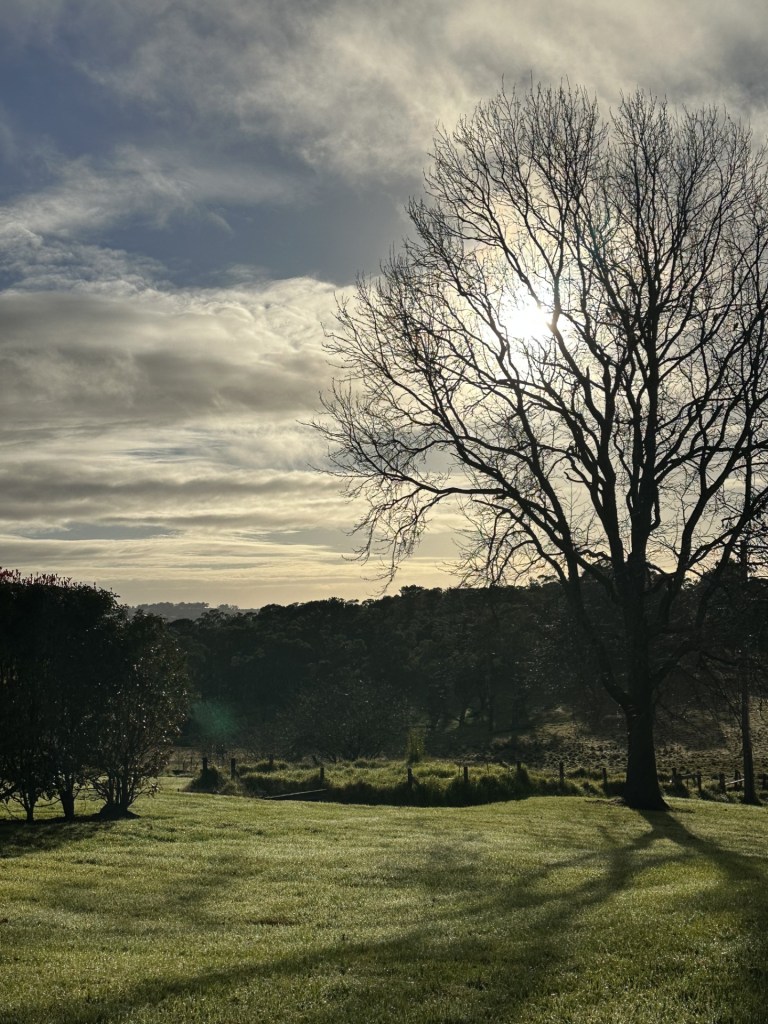
There is a kind of seeing that asks very little of the eyes.
It does not scan the room for evidence, or gather visual proof, or measure worth by what is seen on the surface. It is a slower and quieter seeing, the kind that waits long enough for the truth of a person, a place, or a moment to emerge from beneath the noise. A contemplative sight. There is a song ‘Open the eyes of my heart’ that I once heard sung by a blind boy. It was poetic and impactful.
The words themselves deserve further thought. It is a strange and beautiful phrase, because the heart is not usually trusted as an organ of vision. And yet, in the life of faith, it is often the only place from which we can truly see.
Richard Rohr, a strong advocate for the need for contemplation, describes it as a long, loving look at what really is. Not a glance or a stare. Not the kind of looking that consumes, categorises, or controls. A long and loving look. A look willing to receive reality without needing to possess it.
To see with the eyes of the heart is not to become sentimental. It is not to soften reality so that it becomes easier to bear. Catholic contemplation does not ask us to look away from suffering, contradiction, grief, or the ache of being human. It asks us to look more deeply. To see beyond the wound without pretending the wound is not there. To notice grace without denying pain. To recognise that God is not only present in what is whole, polished, or certain, but often waits in what is fragile, unfinished, and quietly becoming.
This is the way Mary sees. In the icon of Our Lady of Perpetual Help, Mary does not gaze only at the child in her arms. She looks outward, toward us. Her eyes are wide and knowing, holding both tenderness and sorrow. Christ clings to her, one sandal loosened, as the angels hold the instruments of his Passion. Nothing in the image denies suffering. The cross is already near. And yet Mary’s gaze does not collapse beneath it. She holds the child. She holds the mystery. She holds us.
Perhaps this is why contemplation changes us. In silence, in prayer, in the gentle discipline of paying attention, we begin to borrow Mary’s gaze. We learn to see the world less as a collection of problems to be solved and more as a sacramental place where the divine keeps revealing itself. A face becomes an icon. A conversation becomes holy ground. A burden becomes an invitation to tenderness. Even our own lives, so often viewed through the harsh lens of inadequacy, begin to shimmer with mercy.
The eyes of the heart are trained slowly with discipline and habit. They are trained in Eucharist, where ordinary bread is not merely ordinary. They are trained in Scripture, where Mary ponders all these things in her heart. They are trained in the quiet courage of staying present when we would rather turn away. They are trained whenever we allow love, rather than fear, to become our first way of knowing.
And maybe this is the work of a lifetime: to keep asking for the grace to see as God sees.
Not perfectly. Not all at once.
But gently.
Looking through the eyes of grace.